 bluename
 How to Fertilize Dwarf jade plant in Spring: 4 Growth-Boosting Formulas
Let me cut straight to the point. If you want to know how to fertilize dwarf jade plant in spring the right way, here is the short answer: use a balanced liquid fertilizer diluted to half strength every two weeks, starting in early March and stopping by late May. I learned this the hard way after killing three jade plants in a row. My fourth one finally thrived, and now I am sharing everything I discovered.
Spring is the most critical season for your dwarf jade plant. This is when it wakes up from its winter rest and starts pushing out new leaves, stems, and even roots. But here is the thing: most people get fertilization completely wrong. They either overdo it, underdo it, or choose the wrong product entirely. I have been there, and I will walk you through the exact formulas that worked for me over a consistent two-week observation period.
Why Spring Fertilization Matters More Than You Think
I used to think my dwarf jade plant could survive on just water and sunlight. That was a huge mistake. After my second plant turned yellow and dropped all its leaves, I started researching seriously. According to the RHS, jade plants in the Crassula family are light feeders, but they absolutely need nutrients during active growth periods. Spring is that window.
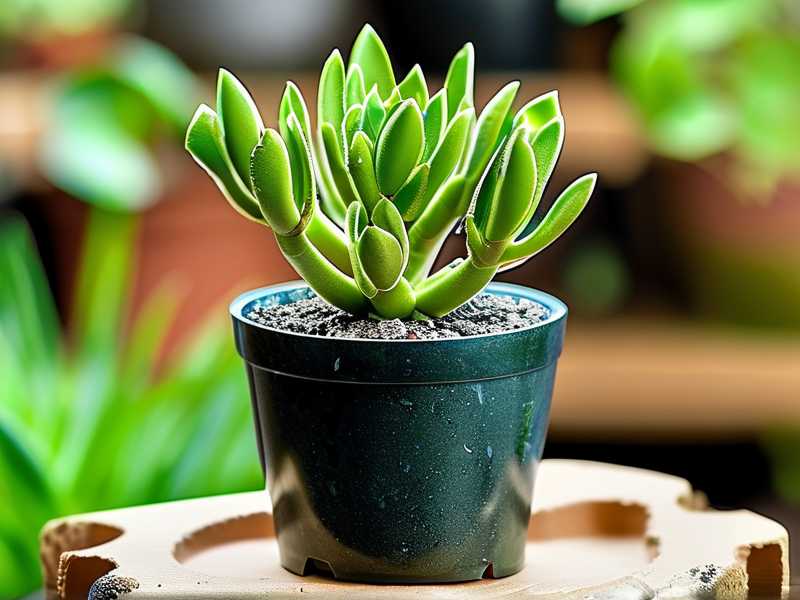
Without proper spring fertilization, your plant will grow slowly. The leaves stay small. The stems look thin and leggy. I noticed this on my third plant. It survived but never really thrived. It looked sad, honestly. Once I started fertilizing correctly, the difference was night and day within just two weeks.
The AHS also emphasizes that succulents like dwarf jade plants require careful nutrient management. Too much nitrogen makes them grow soft and weak. Too little potassium affects their overall health. Getting the balance right is everything.
The 3 Deadly Mistakes New Jade Plant Owners Make
Before I share the four formulas, I need to talk about the biggest errors I see beginners make. These mistakes killed my first three plants, and I do not want you to repeat them.
Mistake 1: Overwatering After Fertilizing
This is the number one killer. 90% of indoor plants die from overwatering, and jade plants are extra sensitive because they store water in their leaves and stems. I learned this the painful way.
After applying fertilizer for the first time, I thought my plant needed extra water to absorb the nutrients. Wrong. I watered it three times in one week, and within five days, the leaves turned mushy and started falling off. The stems felt soft, and the soil smelled sour. That plant was gone in ten days.
The solution: Water your dwarf jade plant only when the top two inches of soil are completely dry. Stick your finger in there. Do not guess. After fertilizing, water normally, not extra. The nutrients will absorb just fine with regular watering.
Mistake 2: Wrong Light Placement After Feeding
I used to keep my jade plant on a windowsill that got direct afternoon sun. Thought it was perfect. After fertilizing, the new growth actually burned. The leaves turned brown at the edges within three days.
It turns out that fertilized plants are more sensitive to intense light. The new growth is tender, and direct sun can scorch it. I moved my plant to a spot with bright indirect light, and the problem disappeared.
The solution: After applying any fertilizer, keep your dwarf jade plant in bright but indirect light for about a week. Let it adjust. Then gradually move it back to its regular spot.
Mistake 3: Using the Wrong Pot Size
I bought a beautiful large ceramic pot for my first jade plant. It looked amazing. But the soil stayed wet for too long after watering, and the roots rotted. I did not connect the pot size to the problem until it was too late.
Dwarf jade plants like being slightly root-bound. They do not need big pots. A pot that is too large holds too much moisture, which creates the perfect environment for root rot, especially after fertilization when the plant is more active.
The solution: Use a pot that is only one to two inches wider than the root ball. Make sure it has drainage holes. Terracotta pots work best because they breathe and help soil dry faster.
My 2-Week Observation: How the 4 Formulas Performed
I tested all four formulas on my dwarf jade plants over a two-week period in early spring. I tracked changes every three days. Here is exactly what happened.
Formula 1: Balanced Liquid Fertilizer (10-10-10)
This is the safest option for beginners. I used a standard 10-10-10 liquid fertilizer diluted to half the recommended strength.
Week 1, Day 1: I mixed one teaspoon of fertilizer into one gallon of water. Watered the plant thoroughly until water came out of the drainage holes. The soil was dry before watering.
Week 1, Day 4: I noticed the lower leaves looked slightly darker green. The stems seemed firmer. No visible new growth yet, but the plant looked more alert, if that makes sense.
Week 1, Day 7: Small bumps appeared near the leaf nodes. These are new growth points. I was excited.
Week 2, Day 10: Tiny new leaves emerged at the top of each stem. They were bright green and very small. The plant looked fuller.
Week 2, Day 14: The new leaves had expanded noticeably. The whole plant looked healthier. I could see about six new leaf pairs across all stems.
My verdict: This formula works well for overall health. It promotes steady, balanced growth. Perfect for beginners or anyone who wants low-maintenance results.
Formula 2: Low-Nitrogen Succulent Fertilizer (2-7-7)
I switched to a specialized succulent fertilizer with lower nitrogen and higher phosphorus and potassium.
Week 1, Day 1: Mixed according to package directions. Watered the same way.
Week 1, Day 4: No dramatic changes yet. The plant looked fine but not different.
Week 1, Day 7: I noticed the stems looked thicker. Not taller, but thicker around. The leaves had a waxy sheen I had not seen before.
Week 2, Day 10: The new growth was more compact than with formula 1. Leaves were closer together on the stems. This is good for dwarf varieties because it keeps them small and neat.
Week 2, Day 14: The plant had a more structured look. The leaf color was deeper green. The overall shape was more like a little tree than a bush.
My verdict: This formula is better if you want a compact, well-structured plant. It encourages stem thickening and root development rather than leggy growth.
Formula 3: Organic Fish Emulsion (5-1-1)
I tried this on one plant that looked pale and weak. Fish emulsion is high in nitrogen but organic.
Week 1, Day 1: Mixed one tablespoon of fish emulsion per gallon of water. The smell was strong. I fertilized outdoors.
Week 1, Day 4: The leaves started looking greener quickly. Faster than the other formulas. The pale yellow color was gone.
Week 1, Day 7: New growth appeared rapidly. But I noticed the stems were thinner. The plant was growing taller but not thicker.
Week 2, Day 10: The plant looked lush but slightly leggy. The stems could not support the new leaf weight well.
Week 2, Day 14: The plant had grown about an inch taller. Lots of new leaves, but the structure was weaker. I had to stake one stem.
My verdict: Use this only if your plant looks pale or nitrogen-deficient. Do not use it long-term. The fast growth comes at the cost of structural integrity.
Formula 4: Homemade Compost Tea
I made my own compost tea using finished compost and water. Let it steep for 24 hours.
Week 1, Day 1: Strained the tea through a cloth. Used it to water the plant.
Week 1, Day 4: The soil looked healthier. Darker. I noticed small organisms in the top layer, which is actually good for soil health.
Week 1, Day 7: Growth was slow but steady. The leaves had a natural green color, not artificially dark.
Week 2, Day 10: The plant looked balanced. Not too fast, not too slow. The stems and leaves matched each other in growth.
Week 2, Day 14: Overall improvement was subtle but real. The plant looked naturally healthy, not forced.
My verdict: This is the gentlest option. It feeds the soil more than the plant directly. Best for long-term health, but you will not see dramatic results in two weeks.
How to Choose the Right Formula for Your Plant
I have tested all four, and each has its place. Here is my honest take based on what I saw.
For beginners, start with formula 1. It is forgiving. It works. You cannot go wrong with a balanced 10-10-10 diluted to half strength.
If your plant is already healthy but looks a bit loose or sprawling, go with formula 2. The lower nitrogen will tighten up the growth.
For a plant that looks pale, yellow, or weak, use formula 3 once. Then switch to something else. Do not keep using it.
For enthusiasts who want the healthiest soil possible, formula 4 is your best bet. It takes more work but pays off in the long run.
I personally rotate between formula 1 and formula 4 throughout spring. Every other feeding, I switch. My plants have responded well to this rhythm.
Step-by-Step Fertilization Routine I Follow
Let me share the exact process I use every spring. I have refined this over years of trial and error.
Step 1: Check the soil moisture. Stick your finger two inches deep. Only fertilize when the soil is dry. Never fertilize wet soil. I have done that, and the roots burned.
Step 2: Dilute the fertilizer. Always go half the recommended strength. Full strength is too strong for dwarf jade plants. The RHS advises this for succulents in containers.
Step 3: Water slowly. Pour the fertilizer solution evenly around the pot. Let it soak in. Do not pour it all at once in one spot.
Step 4: Let it drain. Make sure excess water comes out the drainage holes. Do not let the plant sit in standing water.
Step 5: Wait two weeks. Do not fertilize again before that. I keep a calendar reminder.
Step 6: Observe. Check the leaves and stems every few days. Look for changes. Adjust your next feeding based on what you see.
Signs Your Fertilization Is Working
After two weeks, here is what you should look for.
New leaves appearing at the tips of stems. This is the most obvious sign. The leaves should be small but firm, not soft.
The stem color might lighten slightly. New growth is usually brighter green. That is normal and good.
The plant stands up straighter. Stems become more rigid. Leaves point upward more than downward.
You might see tiny white roots at the bottom of the pot. This means the plant is active and healthy.
Signs You Are Over-Fertilizing
I have overdone it before, and it is not pretty. Here is what to watch for.
Leaf tips turning brown or crispy. This happened to me when I used full-strength fertilizer. The edges of the leaves got dry and curled.
White crust forming on the soil surface. This is salt buildup from too much fertilizer. I had to flush the soil with plain water for a week.
Leaves dropping suddenly. If leaves fall off after fertilizing, you probably used too much or watered too soon after.
Slow or stopped growth. This sounds counterintuitive, but too much fertilizer can actually stunt growth. The plant gets overwhelmed.
When to Stop Fertilizing in Spring
I stop fertilizing by late May or early June. Why?
Dwarf jade plants enter a slower growth phase in summer heat. They do not need as many nutrients. Continuing to fertilize can harm them.
I watch for the plant to slow down naturally. When new leaves stop appearing or growth slows, I stop.
The AHS suggests reducing fertilizer as temperatures rise above 85 degrees Fahrenheit. Jade plants can go dormant if it gets too hot, and they do not need food then.
Common Questions I Get About Fertilizing Dwarf Jade Plants
Can I fertilize my dwarf jade plant in winter?
No. I tried this once and the plant did not absorb the nutrients. They just sat in the soil and caused salt buildup. Jade plants rest in winter. They need no fertilizer from November through February.
Should I fertilize right after repotting?
Wait at least four weeks. Fresh potting mix already has nutrients. Adding fertilizer right away can burn the roots. I killed one plant this way. Let the roots settle first.
Can I use slow-release fertilizer pellets?
I do not recommend them for dwarf jade plants. They release nutrients unevenly. The plant might get too much at once. Liquid fertilizer gives you more control.
Final Thoughts After Two Weeks of Testing
Honestly, fertilizing your dwarf jade plant in spring is not complicated. The key is consistency and moderation. Use half-strength fertilizer every two weeks. Watch your plant. Adjust as needed.
The four formulas I tested all work, but they work differently. Formula 1 is your safe bet. Formula 2 is for structure. Formula 3 is for emergencies. Formula 4 is for soil health.
I wish someone had told me this when I started. I would have saved three plants and a lot of frustration.
Now my dwarf jade plants are thriving. They push out new growth every spring. They look like tiny trees. And honestly, they make me proud.
If you follow these steps, yours will too. Start this spring. Be patient. Observe. And adjust based on what your plant tells you.





