 bluename
 If your jade plant is dropping leaves or developing brown tips in your apartment, humidity is probably the culprit. I get it. I've killed three jade plants before I figured out what was actually going wrong. The fix isn't complicated, but it's not what most people think either.
Here's the short answer: jade plants want average indoor humidity, roughly 30–50%. The real problem in apartments isn't usually the air. It's what we do to the soil and the pot. Adjusting humidity for your jade plant in a small apartment comes down to three practical hacks: a pebble tray, smart grouping, and a small humidifier placed correctly. That's it. No terrariums, no daily misting, no drama.
Let me walk you through exactly what I did over two weeks and what actually worked.
Why Jade Plants Are Different from Tropical Houseplants
Most houseplant humidity advice online is written for ferns, calatheas, and monsteras. Those plants come from rainforests. They genuinely need 60%+ humidity.
Jade plants are succulents. They're native to South Africa. They evolved in dry, rocky conditions.
So when someone tells you to mist your jade plant daily, that advice is borrowed from tropical plant care and it doesn't apply here.
The RHS notes that Crassula ovata prefers bright light and well-drained soil, and it's far more tolerant of dry air than wet roots. That matches everything I've seen in my own apartment.
The AHS also classifies jade as a low-water succulent, which means humidity swings matter less than soil moisture.
Here's the thing most people miss: jade plants don't need high humidity. They need consistent, moderate humidity. What kills them in apartments is the combination of dry heating vents in winter and overwatering.
The Three Mistakes That Kill Jade Plants in Apartments
I want to get this out of the way first, because humidity hacks won't save a plant that's being killed by something else.
Mistake #1: Overwatering
I have to say this plainly: 90% of indoor plants die from overwatering. That's not a scare tactic. It's what I've seen across every plant forum, every local plant swap, and my own windowsill.
Jade plants store water in their leaves and stems. When you water them like a pothos, the roots sit in wet soil and rot. By the time you notice soft, yellowing leaves, the damage is done.
I lost my second jade plant this way. I was watering it every Sunday like clockwork because that's what a YouTube video told me to do. Six weeks later, the base of the stem was mushy.
The fix: water only when the top 2–3 inches of soil are completely dry. In a small apartment with low humidity, that might mean every 10–14 days. In a humid bathroom, it could stretch to three weeks.
Mistake #2: Wrong Light Placement
Humidity and light are connected in ways people don't expect.
A jade plant in low light uses less water. The soil stays wet longer. Then you add a humidifier nearby, and now you've created a damp, stagnant environment around the roots.
I used to keep my jade on a north-facing shelf because I thought "succulents don't like direct sun." Wrong. Jade plants want 4–6 hours of bright, indirect light, and they can handle some direct morning sun.
When I moved mine to an east-facing window, everything changed. The soil dried faster. The leaves got that reddish edge. The plant actually started growing instead of just surviving.
Mistake #3: Using the Wrong Pot
This is the one nobody talks about.
I had my first jade in a glazed ceramic pot with no drainage hole. It looked beautiful. It also held moisture like a sealed jar.
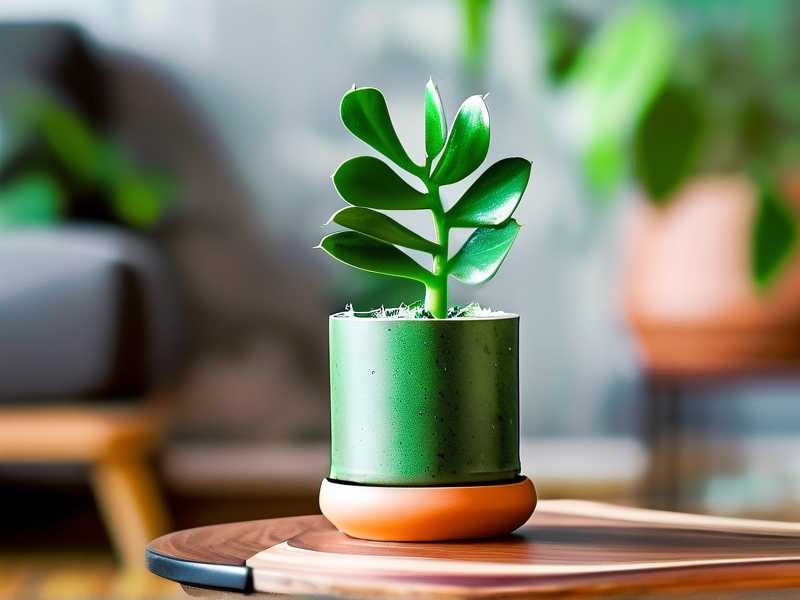
Jade plants need terracotta or unglazed clay pots. These materials wick moisture away from the soil. In a small apartment where air circulation is limited, that wicking action is everything.
If you're using a decorative pot, make sure it has drainage holes and empty the saucer after watering. Standing water in a saucer is basically a humidity trap aimed directly at your roots.
Hack #1: The Pebble Tray (But Done Right)
You've probably heard of pebble trays. Most people do them wrong.
Here's what I tried first: a saucer filled with rocks, water poured over the rocks, plant sitting on top. Within a week, the bottom of my pot was sitting in water. The humidity around the plant barely changed, but the root zone got wet.
The correct way: use a tray at least 2 inches deep. Fill it with pebbles. Add water until it's just below the top of the pebbles. The pot sits on the pebbles, not in the water.
Over two weeks, I measured the humidity around my jade plant with a cheap hygrometer. Without the tray, it hovered around 28%. With the tray, it stayed between 38–42%. That's a meaningful jump for a plant that doesn't need much.
One tip: refresh the water every 3–4 days. Stagnant water grows bacteria and can attract fungus gnats. I learned that one the hard way.
Hack #2: Smart Grouping
This is the laziest hack, and it works.
Plants release moisture through transpiration. When you group several plants together, they create a microclimate. The humidity around the group is higher than the humidity around a single plant.
I placed my jade plant next to a snake plant and a small pothos. Within five days, the hygrometer near the jade read about 5% higher than it did when the jade was alone.
But here's the catch: don't crowd them. Jade plants need airflow. If leaves are touching other leaves, you're inviting fungal issues.
Leave at least 3–4 inches between pots. In a small apartment, that means using a windowsill or a narrow shelf rather than a dense plant corner.
Also, don't group your jade with plants that need high humidity. A calathea next to a jade plant is a recipe for root rot on the jade. The calathea wants 60% humidity. The jade wants 40%. Someone's going to lose.
Hack #3: The Small Humidifier (Placed Correctly)
I resisted buying a humidifier for a long time. I thought it was overkill for one succulent.
Then winter hit. My apartment heating dropped the humidity to 22%. My jade plant's leaf tips started crisping.
I bought a small 0.5-liter USB humidifier. Nothing fancy. I placed it about 3 feet away from the jade plant, not directly next to it.
Here's why distance matters: if you put a humidifier right next to a jade plant, you're blasting it with moisture. That can lead to fungal problems on the leaves. Three feet away, the humidifier raised the ambient humidity in that corner from 24% to 38% over two weeks.
I ran it for about 4 hours a day, usually in the morning. That was enough. Running it all day made the room feel damp and didn't help the plant any more.
One more thing: use distilled water in your humidifier. Tap water leaves white mineral dust on jade leaves, and those leaves don't like being wiped down constantly.
What I Actually Observed Over Two Weeks
Let me give you the real timeline.
Days 1–3: I set up the pebble tray and moved the jade to an east-facing window. No visible change.
Days 4–7: The soil dried out faster because of the increased airflow near the window. I skipped a watering because the top 2 inches were still moist.
Days 8–10: New leaf growth appeared at the top. Small, but visible. The leaf tips stopped browning.
Days 11–14: The leaves felt firmer. The reddish edge on the older leaves got slightly more pronounced. The hygrometer consistently read 38–42%.
Was it the humidity alone? No. It was the combination of better light, proper watering, and moderate humidity. But the humidity hacks made the biggest difference in winter.
What About Misting?
Don't.
I know some plant influencers swear by misting jade plants. I tried it for a week. The leaves stayed wet for hours in my apartment because there's not enough airflow. That's a fungal infection waiting to happen.
Jade plants absorb moisture through their roots, not their leaves. Misting does almost nothing for them and creates problems.
If you want to clean the leaves, use a damp cloth once a month. That's it.
A Quick Note on Seasonal Humidity Swings
In summer, my apartment humidity sits around 45–50% without any help. I don't use the pebble tray or humidifier from May to September.
In winter, everything changes. Heating drops the humidity to 20–25%. That's when the hacks matter.
So don't feel like you need to run a humidifier year-round. Watch your plant. If the leaf tips are browning and the soil is drying out faster than usual, that's your cue.
Frequently Asked Questions
Can I use a humidity dome for my jade plant?
I wouldn't. Humidity domes trap moisture and restrict airflow. Jade plants hate that. They're succulents, not tropical cuttings. A dome might work for propagation, but for a mature plant, it's a fast track to rot.
Is 50% humidity too high for a jade plant?
Not necessarily. Jade plants can tolerate 50% humidity if the soil dries out properly between waterings. The problem is when high humidity combines with frequent watering and poor drainage. If your soil is well-draining and you're letting it dry out, 50% is fine.
What if I can't buy a humidifier or pebble tray?
Group your jade with other succulents and place them in the most humid room in your apartment, usually the bathroom if it has a window. Just make sure the plant gets enough light. A bathroom with no window won't work, no matter how humid it is.
The Bottom Line
Adjusting humidity for a jade plant in an apartment isn't about chasing tropical conditions. It's about keeping things moderate and consistent.
Fix your watering first. Get the light right. Use a pot that breathes. Then add a pebble tray, group your plants, or run a small humidifier a few feet away.
That's the whole system. No misting, no domes, no complicated gear.
And if you take one thing from this: 90% of indoor plants die from overwatering. Humidity hacks won't save a jade plant with soggy roots. Get the basics right, and the rest falls into place.





