 bluename
 How to Fix jade plant Moisture-Stressed Leaves: 4 Balance-Restoring Solutions
There’s a special kind of plant-parent panic that sets in when your trusted jade plant starts talking back—not with words, but with its leaves. One day, it’s a plump, glossy-green symbol of resilience; the next, you’re staring at wrinkled, limp, or discolored foliage that screams distress. If you’re here, you’ve likely already typed “why are my jade plant leaves soft and wrinkly” or “jade plant dropping leaves” into a search bar, desperate for a fix. I know that feeling intimately. After years of growing these succulents, I once nearly lost a prized, decade-old specimen to the confusing symptoms of moisture stress. The journey back to health wasn’t instant, but through a methodical, two-week rescue mission, I discovered that restoring balance is entirely possible. This guide is born from that hands-on experience, the mistakes I made, and the four concrete solutions that truly work.
Understanding the Moisture-Stress Signal Jade plants (Crassula ovata) are drought-tolerant champions, storing water in their thick leaves and stems. Moisture stress occurs when there’s a severe imbalance between water uptake and loss. Crucially, this doesn’t only mean underwatering. Overwatering is a more frequent and dangerous culprit, leading to root rot that prevents water uptake, ironically causing leaves to shrivel as if thirsty. Underwatering simply drains the plant’s reserves. The leaves are your primary diagnostic tool. Soft, mushy, translucent leaves often signal overwatering and potential root rot. Thin, wrinkled, limp leaves that may curl inward typically point to severe thirst. Yellowing leaves, especially those falling off en masse, can be a symptom of either extreme, though black spots or stems lean heavily toward overwatering.
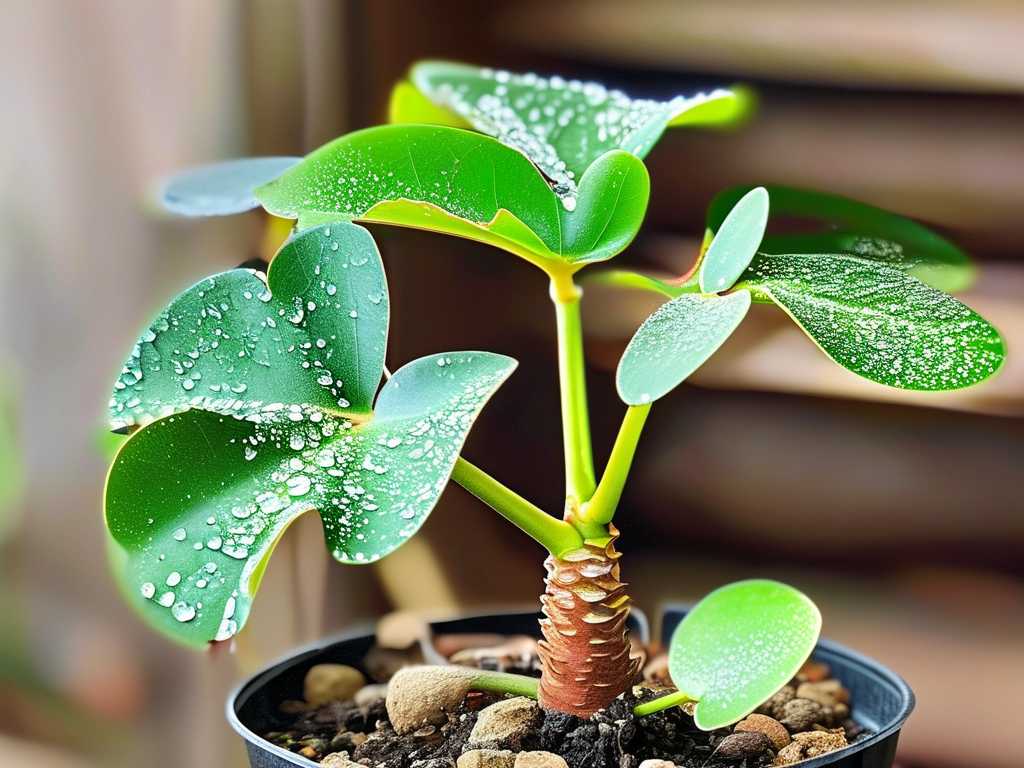
Before you act, confirm the diagnosis. Don’t just touch the soil surface. As the Royal Horticultural Society (RHS) advises for succulent care, the finger test must go deep. I insert my finger at least two inches into the potting mix. If it’s bone-dry throughout, it’s likely underwatering. If it’s soggy or cool and damp days after watering, overwatering and poor drainage are the issues. This initial step is non-negotiable. I once assumed wrinkling meant thirst and watered a plant with compacted, secretly wet soil at the root zone, accelerating its decline. Learning to diagnose correctly was my first, hardest lesson.
Solution 1: The Precision Watering Reset (For Underwatered Jade Plants) When my jade plant showed severe leaf wrinkling and the soil was a dry dust bowl, I knew it was time for a controlled intervention. The goal isn’t to flood the plant in panic but to rehydrate the root ball thoroughly and evenly.
My step-by-step process:
- Preparation: I used room-temperature, filtered water to avoid shocking the roots with cold or chemicals. A shallow tray or sink is essential.
- Bottom-Watering Technique: I placed the pot in about 2 inches of water. This method, recommended by many experts for stressed succulents, allows the soil to absorb moisture upward through the drainage holes, ensuring the entire root mass gets hydrated without compacting the soil surface.
- Patience is Key: I let the pot sit for 30-45 minutes, checking periodically. Once the topsoil felt moist to the touch, I removed the pot from the water.
- Critical Drainage: I let the pot drain completely in the sink for another hour. No plant should sit in a saucer of water afterward.
The 2-Week Observation & Pitfall: Within 3-5 days, the deepest wrinkles began to smooth out. The leaves regained firmness from the bottom up. However, a common pitfall I encountered was overcompensating. After the first deep drink, I waited. I did not water again until the soil was completely dry deep down—a full 10-12 days later. According to the American Horticultural Society’s (AHA) principles on xeriscaping, succulents like jade need a “soak and dry” cycle, not a frequent sip. My patience was rewarded with steady, stable recovery without triggering rot.
Solution 2: Emergency Repotting & Root Triage (For Overwatered Jade Plants) This is the most critical operation for a jade plant showing overwatering symptoms. When leaves turned mushy and dropped at a touch, I knew I had to inspect the roots immediately.
My step-by-step process:
- Gentle Unpotting: I carefully tipped the plant out. The soil was unpleasantly damp and had a slightly musty smell—a bad sign.
- Root Inspection & Surgery: I gently brushed away the old soil. Sure enough, several roots were brown, black, and slimy—classic root rot. Using sterile, sharp scissors, I pruned away every single soft, rotten root back to firm, white, healthy tissue. This felt drastic but is essential.
- The Fresh Start: I selected a new pot with excellent drainage, only slightly larger than the remaining root ball. A terracotta pot is ideal for its breathability. I used a fresh, fast-draining succulent/cactus mix, blending in some extra perlite for aeration.
- Repotting & The Dry Period: I repotted the plant in the dry mix, tamped it gently, and did not water it. This is crucial. The plant needs time for any root wounds to callus over, preventing new rot.
The 2-Week Observation & Pitfall: The first week was nerve-wracking. Some upper leaves continued to wrinkle slightly as the plant focused energy on root repair. I kept it in bright, indirect light, away from direct sun stress. After one full week, I gave it a modest drink. The pitfall here is despair; the plant will look worse before it gets better. By the end of week two, leaf drop had stopped, and the remaining foliage stabilized. New growth was not expected yet, but the cessation of decline was the victory.
Solution 3: Environmental Humidity & Light Balancing Moisture stress isn’t just about soil water. Environmental factors play a huge role. I have a jade plant near a heating vent that showed chronic mild wrinkling despite a good watering routine. The hot, dry air was pulling moisture from the leaves faster than the roots could replenish.
My adjustment process:
- Humidity: While jades don’t need tropical humidity, extremely dry air is a stressor. I moved it away from the direct airflow of vents and heaters. For a more severe case, grouping it with other plants can create a slightly more humid microclimate.
- Light: Adequate light is non-negotiable for a healthy water cycle. A jade in low light uses water slower, making it more prone to overwatering. I ensured my recovering plants received at least 4-6 hours of bright, indirect light. However, I avoided scorching direct midday sun during their vulnerable recovery phase, as sunburn can compound stress.
The 2-Week Observation: The plant near the vent showed improved leaf turgor (fullness) within 10 days of being relocated to a stable spot with consistent, bright light. The leaves became consistently plump, confirming that balancing environmental moisture loss was key.
Solution 4: Long-Term Soil & Pot Strategy for Moisture Equilibrium The ultimate fix for preventing recurring moisture stress is engineering the right home. My early mistake was using standard potting soil in a decorative pot with a tiny drainage hole. It retained water for far too long.
My permanent fix:
- The Perfect Mix: I now create my own blend: 2 parts succulent/cactus mix, 1 part perlite, and 1 part coarse sand or pumice. This creates a gritty, fast-draining environment that mimics the jade’s natural habitat.
- The Right Pot: I almost exclusively use unglazed terracotta pots. They are porous, allowing the soil to dry from the sides as well as the top. The pot must have a drainage hole.
- The “Chopstick Test”: Instead of guessing, I insert a wooden chopstick into the soil before watering. If it comes out clean, it’s time to water. If it has damp soil clinging to it, I wait.
The Long-Term Result: After repotting all my jades into this gritty mix and terracotta pots, the frequency of watering debates vanished. The plants experienced clear wet/dry cycles, promoting strong root growth and eliminating the chronic low-grade stress that caused occasional leaf drop or wrinkling.
Frequently Asked Questions
Can a jade plant recover from overwatering? Absolutely, but swift action is required. The recovery hinges entirely on the extent of root rot. If you catch it early, remove all rotten parts, repot in dry, gritty mix, and withhold water for a week or more, the plant has a very high chance of recovery. The plant will use its stored water to regenerate new roots. My own recovered specimen is now thriving two years later.
How often should I water my jade plant to prevent stress? There is no universal schedule. The correct answer is: water deeply only when the soil is completely dry throughout. This could be every 7-10 days in a hot, dry summer or every 3-4 weeks in a cool, dim winter. Your plant’s environment and pot type dictate the schedule. Let the soil dryness, not the calendar, be your guide.
Why are the leaves on my jade plant still wrinkling after watering? If you’ve watered thoroughly and wrinkles persist after a week, two issues are likely. First, the roots may be damaged or rotten from prior overwatering and cannot absorb the water you’re providing (pointing back to Solution 2). Second, the soil may be hydrophobic—so dry it repels water, causing it to run down the sides without wetting the root ball. In this case, bottom-watering (Solution 1) is the best way to ensure complete saturation.
Watching a moisture-stressed jade plant return to vitality is a lesson in patience and observation. The journey from limp, wrinkled leaves to firm, glossy plumpness over a two-week period is deeply rewarding. It reinforces that these plants ask not for constant attention, but for informed intervention. By accurately diagnosing the stress signal—whether it’s thirst or drowning—and applying the corresponding balance-restoring solution, you’re not just saving a plant. You’re learning its language, building a stronger partnership, and ensuring your jade continues as a sturdy, joyful companion for years to come. Start with the finger test, act with purpose, and trust the process.





