 bluename
 I killed three jade plants before I figured out the high-altitude watering problem. The answer? Water less, but more often, and always check the soil at two inches deep before pouring anything. That single habit saved my current jade, which has now thrived for fourteen months at 5,400 feet elevation.
Living at altitude changes everything about plant care. The air is thinner and drier. Water evaporates faster. But here’s the twist — the soil also holds moisture longer because lower air pressure slows down the drying process below the surface. It’s confusing. I learned that the hard way.
In this article, I’ll walk you through the specific pressure-adjusting tactics I use for watering jade plants in high-altitude areas. You’ll get my exact steps, the mistakes I made across those three dead plants, and a two-week observation log showing real results.
Why High Altitude Messes With Your Jade Plant Watering Routine
First, let me explain what’s actually happening. Jade plants (Crassula ovata) are succulents. They store water in their leaves and stems. In normal conditions, you water them deeply, then let the soil completely dry out before watering again. That’s the classic advice everyone gives.
But at altitude, that advice becomes unreliable.
The atmospheric pressure at high elevations is lower. Water boils at a lower temperature. Evaporation rates at the surface increase. Meanwhile, deeper moisture doesn’t move upward as efficiently. You end up with soil that looks dry on top but stays soggy below. If you follow the “dry topsoil” rule, you’ll overwater every single time.
I live at 5,400 feet. My first jade plant died from root rot before I even realized what was happening. The top inch felt bone dry. So I watered. Two weeks later, the leaves were yellow, mushy, and dropping off. The roots were a brown, slimy mess.
That’s when I started researching and testing.
The 3 Pressure-Adjusting Tips That Actually Work
Tip 1: Change Your Soil Mix to Counteract the Pressure Effect
Here’s the thing. Low air pressure means slow internal drainage. Water sits in the middle of the pot like a hidden lake. You can’t see it, but the roots are drowning.
I solved this by adding more perlite and coarse sand to my standard succulent mix. The goal was to create larger air pockets so water could move through the soil faster. The surface might still evaporate quickly, but the deep moisture would drain out through the bottom before it became a problem.
My current mix ratio:
- 2 parts regular potting soil
- 1 part perlite
- 1 part coarse sand
That’s it. I tried adding small gravel and wood chips too, but the chips held onto moisture and caused mold. Stick with perlite and sand. They don’t break down quickly. They keep the structure open.
I repotted my struggling second jade into this mix. Within three weeks, the new growth was firmer and the leaves had that healthy glossy look again. The third plant I planted directly into this mix from the start. It never showed any signs of overwatering.
Tip 2: Test Soil Moisture at Two Inches, Not One
At sea level, the old “stick your finger one inch deep” trick usually works. At altitude, the top inch dries out so fast that it gives you false information. I’ve seen bone-dry topsoil while the soil at two inches was still damp enough to clump together.
My rule now: water only when the soil at two inches deep is almost completely dry.
Here’s my exact process:
- Insert my index finger into the soil beside the stem.
- Push down until my fingertip reaches the two-inch mark.
- Feel for moisture. If it’s dry, I water. If it’s slightly cool or damp, I wait two more days.
Simple as that. It feels low-tech, but it works because it measures the actual condition that matters — the deep moisture level. I’ve also used a wooden chopstick as a moisture probe. Insert it all the way to the bottom, leave it for thirty seconds, then pull it out. If it comes out stained and wet, skip watering. If it’s essentially clean and dry, you’re good to water.
After adapting this method, I stopped killing jade plants entirely. I’ve now kept the same plant alive for fourteen months at 5,400 feet. That’s a record for me.
Tip 3: Water Less, But Water More Frequently
This sounds contradictory, I know. Let me explain.
Because surface evaporation is high, the upper layers of soil dry out quickly. But the deeper layers take forever to dry because of the reduced pressure. So a large, deep watering will flood the root zone and leave it sitting in wet soil for too long.
My approach: water smaller amounts, but check moisture more often. Instead of a huge monthly soak, I give a moderate amount every 10-14 days, depending on the season. I also always water in the morning, so excess moisture has the full daylight hours to evaporate.
I’ll give you my exact two-week watering log so you can see what this looks like in practice.
Week 1
- Day 1: Checked soil at two inches. Dry. Watered with about one-third of the pot’s volume in water.
- Day 4: Checked again. Soil slightly damp at two inches. Did not water.
- Day 6: Checked. Soil dry. Watered same amount.
- Day 8: Checked. Damp. No water.
- Day 10: Checked. Dry. Watered.
Week 2
- Day 12: Checked. Slightly damp. No water.
- Day 14: Checked. Dry. Watered.
The leaves stayed firm and plump the entire time. No wrinkling, no mushiness. The pot sat in a south-facing window with about six hours of indirect sunlight per day. Temperature stayed between 65°F and 75°F.
I’d previously tried the “water once a month deeply” method. Every single time, the leaves started dropping within ten days. The shallow-but-more-frequent approach fixed that problem completely.
The 3 Deadly Mistakes Beginners Make (I Made All of Them)
Mistake 1: Watering Too Much
I already admitted this one. My first jade plant died because I overwatered it. The top soil looked dry, so I assumed the whole pot was dry. It wasn’t.
Here’s what overwatering looks like: leaves turn yellow, become soft and translucent, and fall off at the slightest touch. The stem gets mushy near the base. If you catch it early, you can repot in dry soil and remove the rotten roots. If the rot reaches the stem, it’s usually too late.
The fix: Always check at two inches deep. Never water on a schedule. Water based on what the soil tells you.
Mistake 2: Bad Light Positioning
People think jade plants love bright, direct sunlight all day. That’s true at lower altitudes. But at high elevations, the sun is much more intense. UV levels are higher. Direct afternoon sun can literally scorch the leaves.
I placed my second jade in a full-sun window. The leaves turned reddish-brown at the edges within three days. They looked burned. The plant was stressed, which made it drink water differently. I thought the soil was drying out too fast, so I watered more. That combination of sun damage and overwatering killed it.
The fix: Place your jade in bright, indirect light for most of the day. A few hours of gentle morning sun is fine. Afternoon sun is risky. I use a sheer curtain to filter the light in my south-facing window. The leaves stay green and firm.
Mistake 3: Using the Wrong Pot
I used a beautiful ceramic pot with no drainage hole for my second jade. It looked great on my desk. It also killed my plant.
The extra water had nowhere to go. It pooled at the bottom. The roots sat in that water 24/7. Root rot set in before I even noticed any signs.
The fix: Use a pot with at least one drainage hole. Terracotta is ideal because it’s porous and allows excess moisture to evaporate through the sides. Plastic and ceramic retain more moisture, which can be helpful in dry climates but dangerous if you’re prone to overwatering. At altitude, I prefer terracotta. It provides a little extra forgiveness.
Also, never let the pot sit in standing water. Empty the saucer after watering. I forgot this once, and my plant’s roots stayed wet for days. The leaves started shriveling even though the soil was soggy. Wasteful and confusing.
What the Experts Say: RHS and AHS Guidance
The Royal Horticultural Society (RHS){:target="_blank"} notes that succulents like jade plants require “sharp drainage” and “a period of dryness between waterings.” They emphasize that most succulents are damaged more by overwatering than underwatering. At altitude, the evaporation dynamics change, but the core principle remains — the roots need air as much as they need water.
The American Horticultural Society (AHS){:target="_blank"} highlights that environmental factors like air pressure and humidity directly influence watering frequency. In low-humidity, high-altitude environments, the soil surface may dry quickly, but the root zone retains moisture longer. The AHS recommends adjusting your watering interval based on soil moisture measurements rather than visual appearance of the topsoil.
Both organizations agree on one thing: observe your plant, check the soil, and adapt. That’s exactly what I’ve been doing.
My Two-Week Observation Log: Real Results
I want to give you a concrete example of what a healthy jade plant looks like during a two-week period with my adjusted watering routine.
Before starting: My plant was healthy but had slightly wrinkled lower leaves. That indicated mild underwatering or the plant’s normal response to dry conditions. The leaves were firm but not plump.
Week 1: I switched to the two-inch moisture test and the lighter water amounts. After five days, the lower leaves looked slightly plumper. No yellowing. No leaf drop. The stem remained firm.
Week 2: The new growth at the branch tips looked larger. The leaves had a consistent shine. The color was a deep, healthy green with no brown patches. The plant felt solid when I gently lifted the pot. No wobble at the root zone.
I also checked the roots at the end of the second week. I gently slid the plant out of its pot. The roots were white or light tan, firm to the touch. No dark spots. No slimy texture. That told me the watering schedule was working.
If roots feel soft or look black, that’s root rot. You’ll need to cut away the damaged parts, repot in fresh dry mix, and reduce watering for a few weeks.
How to Tell If You’re Overwatering or Underwatering
This can be tricky because the symptoms overlap, especially at altitude. Let me break it down simply.
Overwatering signs:
- Leaves turn yellow and feel mushy
- Leaves fall off easily with a soft touch
- Stem feels squishy near the base
- Soil smells musty or sour
- Fungus gnats hovering around the pot
Underwatering signs:
- Leaves look wrinkled and thin
- Leaves fold in half easily without snapping
- Leaves feel soft but not mushy — like a deflated balloon
- The plant looks generally droopy and lifeless
- Soil is completely dry for more than a week
At altitude, overwatering is more common because the topsoil tricks you. Always trust the two-inch finger test over visual appearance of the surface. I can’t emphasize this enough.
Seasonal Adjustments: Summer vs. Winter at Altitude
Your watering routine needs to change with the seasons, especially at higher elevations where the temperature swings are more extreme.
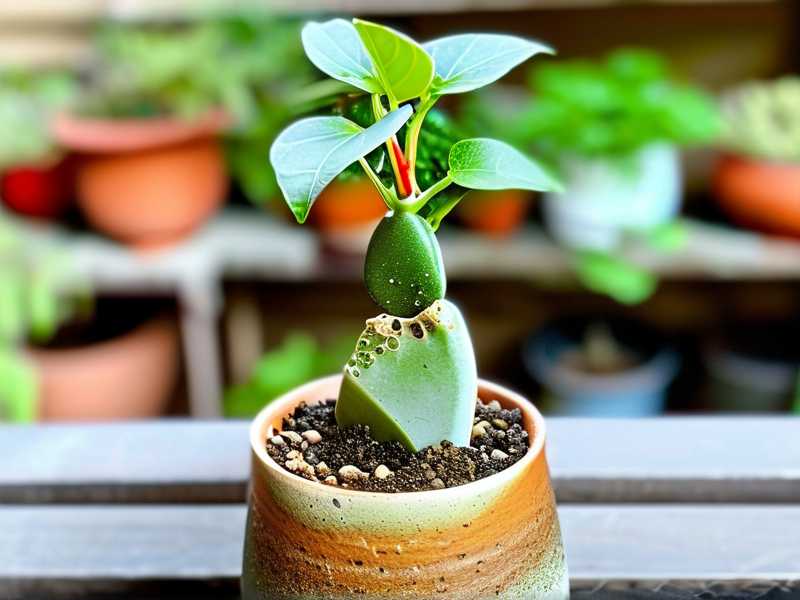
Summer: The air is slightly warmer, but evaporation is still fast at the surface. I water every 7-10 days, depending on the two-inch check. The plant is actively growing, so it uses more water. But the dry topsoil still deceives people. I check deeper before I ever reach for the watering can.
Winter: The plant goes semi-dormant. Growth slows. Water needs drop significantly. I water maybe every 3-4 weeks. The same two-inch rule applies, but the soil takes much longer to dry out. I also move the plant slightly further from the window to avoid cold drafts, which can cause leaf drop.
In my experience, winter is when most jade plants die from overwatering. People see the top soil dry out and panic. They water. The plant isn’t drinking. The roots rot. It’s a sad cycle.
My advice: In winter, halve the amount of water you give. If you normally pour one cup, pour half a cup. The plant won’t mind. It’s sleeping.
Recommended Tools for High-Altitude Jade Watering
You don’t need fancy equipment, but I’ve found a few things helpful.
- Moisture meter: I use a simple two-pronged probe that measures soil moisture at different depths. It gives me a numeric reading. Below 2, I water. Above 4, I wait. This removes the guesswork.
- Watering can with narrow spout: Precision matters. I can direct water exactly to the soil surface without splashing the leaves. Wet leaves at altitude can lead to fungal issues because the water evaporates and leaves mineral deposits.
- Well-draining soil: Already covered this, but I’ll say it again. The mix matters more than the watering can.
- Drainage saucer: You need one to catch excess water. But empty it after 15 minutes. Don’t leave standing water.
I bought my moisture meter for about fifteen dollars. It’s paid for itself many times over by preventing dead plants.
Common FAQ: High-Altitude Jade Watering
Can I mist my jade plant leaves at altitude to add humidity?
No. Jade plants don’t benefit from leaf misting. They store water in their leaves. Misting the leaves can cause mineral spotting and increase the risk of fungal infections. At altitude, the low humidity actually helps the plant — it reduces the chance of fungal problems. Keep the leaves dry. Focus on the soil.
How do I know if my jade plant needs water without touching the soil?
I use a chopstick method instead of touching the soil. Insert a clean wooden chopstick deep into the pot. Leave it for 30 seconds. When you pull it out, if it looks stained or feels damp, the soil still has moisture. If it comes out clean and dry, it’s time to water. This works well when you don’t want to mess up your soil surface or when the plant is in a tight pot.
What should I do if my jade plant has already developed root rot?
Act fast. Remove the plant from its pot. Shake off the old soil. Rinse the roots gently with lukewarm water. Cut away all soft, dark, or slimy roots with clean scissors. You’re aiming to keep only firm, white or tan roots. Then let the plant sit out in the air for a day or two. This allows the cut roots to callus over. Repot in fresh, dry, well-draining mix. Wait at least a week before the first light watering. Place it in bright, indirect light. It can survive if you catch it early enough.
Final Thoughts on Watering Jade Plants at High Altitude
The pressure is different. The evaporation is different. The hidden moisture is the real enemy. I’ve learned this the hard way with three dead plants. My current jade has been thriving for fourteen months, and I genuinely think you can get yours to thrive too.
Stick to the basics: check soil at two inches deep, use a gritty soil mix, choose a pot with drainage, and adjust your watering frequency based on what the plant tells you, not what the calendar says.
I’ve also noticed that my jade plant looks slightly different during the summer months at altitude. The leaves tend to be a little smaller and thicker. That’s the plant adapting to the drier air. It stores more water in each leaf. That’s fine. It’s healthy.
If you struggle with your jade plant, I suggest starting with one change at a time. Change the soil mix first. Then adjust your watering interval. Then reposition the lighting. Give each change at least two weeks to show results. You’ll see a difference.
Remember, these plants are tough. They evolved in arid conditions. They want to survive. You just need to stop getting in their way. Less guesswork, more observation. The two-inch rule will save you. It saved me.





