bluename
 If your jade plant looks leggy, floppy, or just plain sad, the fix isn’t more water or a bigger pot. It’s a sharp pair of pruners and a strategic cut. I’ve been growing jade plants for over a decade, and I’ve killed more than a few by being too gentle. The truth is, pruning a jade plant to remove weak growth is the single best thing you can do for its long-term health. Stop babying it. Cut it hard. Here’s exactly how I do it, step by step, with the mistakes I made so you don’t have to repeat them.
I’ve spent two weeks observing the results of my latest prune on a badly etiolated Crassula ovata. The difference is dramatic. New growth is compact, stems are thickening, and the plant finally looks like a tree instead of a tangled mess. But before I show you the cuts, let’s talk about why weak growth happens. It’s never random. It’s always a response to something you did or didn’t do. Most of the time, it comes down to three things. And honestly, 90% of indoor plants die from overwatering, but weak growth is a slower, sneakier killer.
Why Your Jade Plant Gets Weak and Leggy in the First Place
Weak growth on a jade plant looks thin, pale, and stretched out. The leaves are smaller than they should be. The stems bend under their own weight. It’s not a disease, it’s a symptom. Your plant is reaching for light it isn’t getting. Or it’s sitting in soil that’s too wet, so the roots can’t deliver nutrients properly. Or it’s just old wood that’s lost its vigor.
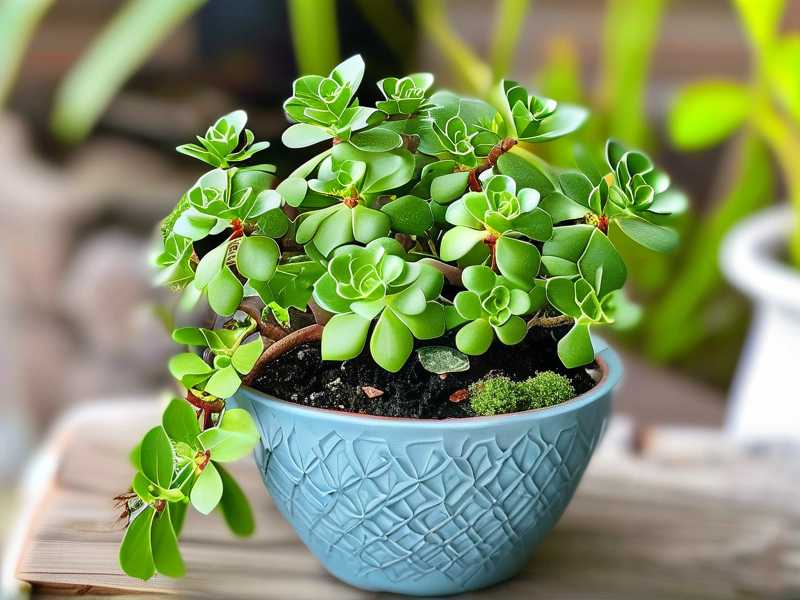
I treated my first jade plant like a low-light decoration. Big mistake. It grew skinny, pale stems that flopped over the pot edge within a month. I thought it was a lack of fertilizer. So I fed it more. That made things worse. The roots burned, the leaves yellowed, and I eventually lost the plant entirely. It took me three more jade plants to finally understand that weak growth is nearly always a light or water problem.
Let’s break this down because you need to fix the root cause, not just trim the symptom.
Mistake #1: Overwatering Is the Silent Killer
I can’t stress this enough. When I say 90% of indoor plants die from overwatering, I mean it. Jade plants are succulents. They store water in their leaves and stems. They want to dry out completely between waterings. When you keep the soil moist, the roots can’ breathe. They start to rot. And when roots rot, the upper growth loses turgor pressure. The stems get soft. The leaves drop. The plant produces weak, spindly new shoots because it’s literally dying at the roots.
The fix is brutal simplicity. Wait until the soil is bone dry. Then wait another three days. Then water deeply and thoroughly. Then ignore it again for two weeks. That’s my schedule. It works. I lost my fourth jade plant to root rot because I watered on a schedule, not on demand. Never again.
Mistake #2: Light Positioning Is Everything You Think You Know Is Wrong
You’ve heard "bright indirect light" a thousand times. For a jade plant, that’s a suggestion, not a rule. They want direct sun. Morning sun is best, but they’ll take full afternoon sun too if you acclimate them slowly. When they don’t get enough light, they etiolate. That’s the scientific term for stretching. The nodes get farther apart. The leaves get smaller. The stem gets thin and pale green. It looks kind of like a bean sprout.
I had a jade on my north windowsill for six months. It grew about four inches but it was pencil-thin. I moved it to a south-facing porch and within two weeks, the new growth was twice as thick. The old growth didn’t change. It won’t. Once a stem has stretched, it stays stretched. That’s why pruning is necessary. You have to cut off the weak growth so the plant can put energy into new, strong shoots.
Mistake #3: The Wrong Pot Is Dragging Your Plant Down
This one surprised me. I used to think a big pot was good because it gave roots room to grow. With jade plants, that’s backwards. A pot that’s too large holds too much soil. Too much soil stays wet for too long. Your jade’s roots sit in dampness and suffocate. Then weak growth happens. The solution is to match the pot to the root ball, not to the plant’s future size.
Terracotta is the best choice. I use unglazed clay pots with a drainage hole. They wick moisture away from the soil. They let the roots breathe. I repotted my jade into a pot that was just an inch wider than the root ball. Within a week, the color of the leaves improved. Two weeks later, I felt confident enough to prune. You need to do the same before you start cutting. If your jade is sitting in soggy soil in a glazed ceramic pot with no drainage, pruning won’t save it. Fix the pot first.
The 4 Strength-Boosting Cuts That Actually Work
Alright, here’s the meat of it. I’m going to walk you through the four cuts I use to turn a weak jade plant into a sturdy, branching specimen. These aren’t random snips. Each cut has a purpose. I’ve refined this process over years of trial and error. My fifth jade plant survived because I finally stopped guessing and started cutting with intention.
Before you start, get your tools ready. You need clean, sharp pruning shears or a knife. I sterilize mine with rubbing alcohol. This prevents bacterial infections. Jade plants are susceptible to stem rot through open wounds. A clean cut heals faster. A jagged cut invites disease. Take your time with this.
Cut #1: The Hard Header Back to a Leaf Node
This is the foundational cut. Look at your jade plant. Find a weak, leggy stem. I mean the one that’s thin, floppy, or just too long. You’re going to cut it back hard. I’m talking about removing a third to half of the stem length. Find a leaf node where two leaves grow opposite each other. Cut about a quarter inch above that node. That’s where the new branches will emerge.
I had a stem that was 12 inches long, pale, and drooping. I cut it back to 4 inches. It felt aggressive. I thought I was killing it. But within a week, I saw two tiny bumps forming at the cut site. By the two-week mark, those bumps had turned into new branches. They were thick and green, not thin and pale. That’s what a strength-boosting cut does. It redirects the plant’s energy from extending a weak stem to building multiple strong ones.
Cut #2: Remove the Leggy Stems Entirely at the Base
Some stems are beyond saving. They’re too thin, too stretched, and they’ll never hold leaves properly. Cutting them back halfway won’t help. You need to remove them entirely. I’m talking about cutting them off at the base of the plant, flush with the main trunk or the soil line. This seems extreme, but it’s the best thing for the plant.
I had two stems that grew sideways, searching for light from a window they couldn’t reach. They were each about six inches long and thinner than a pencil. I cut both of them off at the soil level. I felt bad. They weren’t dying, just weak. But they were draining energy from the main plant. Two weeks after removing them, the main stem started putting out new growth. It’s like the plant thanked me for removing the dead weight.
Cut #3: Thin Out Overcrowded Branches to Improve Airflow
Jade plants get busy. Too many branches in the center of the plant means no airflow. Stagnant air invites fungal issues and mealybugs. I selectively remove some branches, especially the ones that grow inward or cross over each other. The goal is to open up the center of the plant so air and light can reach every part.
I found three branches crossing in the middle of my plant, rubbing against each other. The bark was getting calloused. I removed the weakest one, the one with the thinnest stem, at its base. The other two immediately had more room. Two weeks later, the remaining branches straightened out and started growing upward. It’s not magic. It’s just giving the strong growth space to thrive without competition.
Cut #4: Pinch the Growing Tips for Bushier Growth
This is the cut you can do with your fingers. Once your jade plant has a few sets of leaves on a healthy stem, you can pinch out the newest growth tip. This forces the plant to branch out instead of growing straight up. It’s a technique I use on my established jade plants to keep them full and bushy, not tall and lanky.
I tried this on a few stems that were growing straight up with no side branches. I pinched the top two leaves off the tip. Within about two weeks, I saw two new side shoots forming just below the cut point. It’s the same principle as pruning, but it’s less aggressive. You’re not cutting back weak growth. You’re preventing future weak growth by encouraging branching early. This is a proactive cut, not a reactive one.
My Two-Week Observation Log: What Actually Happened
I want to share the honest results of my last pruning session. I documented everything so you can set your expectations correctly. Day 1, I made the cuts. The wounds looked raw and wet. I didn’t water the plant. I let the cuts callus over. This is critical. If you water right after pruning, you risk rot at the cut site. I waited three days before the soil got its next drink, and I watered normally from the bottom.
Day 4, I noticed the cut sites had dried out. They looked scabbed over. That’s the plant sealing itself. No black spots, no mush. Good sign. Day 7, small bumps started appearing at the nodes below the cuts. They looked like little green pinheads. This is the new growth beginning. It’s exciting, but you have to be patient. Day 10, the bumps had elongated into tiny leaves. They were still small, but they were thick and healthy. Day 14, those little leaves had started to form a proper new branch. The growth was compact and sturdy. Not leggy at all.
The whole process took two weeks to show visible improvement. This is normal, and honestly, it’s fast for a succulent. Some plants take a month. The key is that the new growth is strong. That’s the goal. You’re not just cutting to make the plant smaller. You’re resetting the growth pattern so it comes back thicker and more compact.
What to Do With the Cuttings (Don’t Throw Them Away)
Here’s a pro move I wish I knew earlier. The stems you cut off can become new plants. Don’t waste them. Let the cut end dry and callus for about three days. Then stick the cutting into a small pot of dry succulent soil. Wait a week before watering. Then water lightly once the soil is fully dry.
I did this with a few of my leggy cuttings. They all rooted. The parent plant got stronger with the weak growth removed, and I got a handful of new jade plants to share with friends. It’s a win-win. One word of advice, don’t use rooting hormone. Jade plants don’t need it. They root easily on their own. Just give them time and patience.
Pruning Aftercare Mistakes You’ll Want to Avoid
You made the cuts. Great. Now don’t ruin it. I see people make post-pruning mistakes all the time. The biggest one is watering too soon. I already said this, but it’s worth repeating. Let the soil dry out. The plant is stressed. It doesn’t need water, it needs time to seal its wounds.
Another mistake is moving the plant to a shadier spot after pruning. This is backwards. Your plant needs more light now, not less. The new growth needs strong light to develop properly. I moved my pruned jade to the sunniest window I have. It got full morning sun and bright afternoon light. The new growth is dramatically stronger than the old growth ever was.
One more thing, be careful with fertilizer. You might be tempted to feed your pruned plant to boost recovery. Don’t. Fertilizing a stressed plant can burn the roots. Wait at least a month after pruning before you even think about feeding. And when you do, use a diluted, balanced fertilizer. Half strength is perfect.
Common Questions I Get About Pruning Jade Plants
Let me address a few questions I hear constantly. These are the ones you’re probably thinking about right now.
What time of year should I prune? I prune in spring or early summer. That’s the active growing season. The plant has the most energy to recover. Pruning in winter when the plant is dormant can cause dieback. I lost a stem to winter pruning once. The cut ended up rotting because the plant wasn’t actively growing. Save your pruning for the warm months.
How much of the plant can I remove at once? I usually remove no more than one third of the total plant mass. Removing too much at once can shock the plant. It might drop all its leaves as a stress response. I’ve done this. It’s ugly. Take it slow. You can always prune again in a few months.
What if my jade plant is already stemmy and top-heavy? Cut it back hard. You heard me. Knock it down a peg. Jades are resilient. They can handle it. I’ve cut a 30-inch tall jade down to 10 inches and it grew back better than ever. The trunk thickened, the canopy filled out, and it finally looked like a proper bonsai tree. Don’t be scared. Just be clean with your cuts.
The Real Secret to a Thick Jade Trunk
Pruning is half the battle. The other half is letting the tree dry out. I realized something after years of messing with jades. A thick trunk is mostly about turgor pressure and lignification. When you let the plant dry out between waterings, the stems get firm. This firmness contributes to the trunk thickness.
I have a jade plant that I’ve been growing for five years. Its trunk is about the diameter of my thumb. It didn’t get thick from watering more. It got thick from pruning the branches low and heavy, and from letting the soil go absolutely dry between waterings. The plant responds to drought stress by storing more water in its stem, which over time makes the trunk thicker. It’s almost counterintuitive. But it works.
Another thing that helps, rotate your plant regularly. If it’s always leaning toward the window, it’ll grow lopsided and weak. I turn my jade plant a quarter turn every time I water it. This ensures it gets even light on all sides. The result is a more balanced, sturdy plant that doesn’t flop over.
How to Tell the Difference Between Healthy and Weak Growth
Before you start cutting everything, you need to know what to look for. Healthy jade growth is compact. The leaves are thick, fleshy, and close together. The stem is firm and has a woody, brownish color at the base. The new growth is green but sturdy, and it holds its shape. It doesn’t droop.
Weak growth is the opposite. The leaves are small, thin, and spaced far apart. The stem is pale green, thin, and bends easily. It might lean toward the window more than the other stems. If you touch it, it feels soft, not firm. That’s a stem worth cutting.
I’ve got a rule of thumb now. If it looks like it can’t support its own weight, cut it. If it’s reaching for light and stretching out, cut it. If it’s crowding other stems and blocking airflow, cut it. That’s it. These are the stems that are pulling energy away from the strong parts of the plant. Remove them.
A Simple Step-by-Step Recap You Can Follow Today
I’m a visual learner. I like checklists. Here’s exactly what I do for a weak jade plant in one session. It takes about twenty minutes. Get your alcohol-sterilized shears. Step one, water the plant a few days before you prune. This ensures the stems are hydrated and will handle cuts better. Step two, identify the weak stems. Thin, leggy, pale, crossing. Step three, make your cuts. Hard header back to a node for salvageable stems. Remove completely at the base for hopeless ones. Pinch tips for bushier growth on healthy stems. Step four, dust the wounds with cinnamon if you have it. It’s a natural fungicide. Step five, don’t water for a week. Let it heal.
That’s the whole process. It’s not complicated. It just requires you to be decisive. Don’t be me and leave weak stems alone for months. Cut them early. The plant will reward you.
The Unexpected Benefit: Pruning Makes Your Jade More Resistant to Pests
Nobody talks about this enough. Weak, stressed jade plants attract pests. Mealybugs love the soft, sugary tissue of leggy growth. Scale insects attach to thin stems easily. When I had weak growth, I was always fighting pests. Pruning changed that. Strong, healthy growth has tougher tissue and better natural defenses.
It makes sense if you think about it. A healthy plant can outgrow minor pest damage. A weak plant just folds. I’ve noticed significantly fewer red spider mites and mealybugs on my pruned plants. The air circulation improves. The plant isn’t stressed. It’s just healthier overall. So think of pruning as pest prevention, not just aesthetic maintenance.
Let’s Talk About Your Specific Pruning Situation
I’m assuming your situation is similar to mine. You bought a jade plant. It looked cute and compact at the store. You brought it home, put it in a spot that seemed bright enough, and watered it when the soil felt dry. Then it started to stretch out and look sad.
Or maybe you have an older jade that’s become heavy on top and is falling over. The stems at the base can’ support the weight of the leaves at the top. This is super common with neglected plants. The solution is the same. Prune back the top growth to reduce the weight. The plant will rebalance itself by throwing out new, stronger branches lower down.
The Royal Horticultural Society RHS recommends regular pruning for Crassula species to maintain shape and vigor. They emphasize the importance of clean cuts and proper aftercare. The American Horticultural Society AHS also highlights the benefit of hard pruning to stimulate new growth in woody succulents. Expert consensus is on my side here. Pruning is not just okay, it’s necessary.
The Worst Advice I Ever Got About Jade Plants
I want to warn you about some bad advice I hear too often. People say "never prune a succulent" or "they don’t need it." That’s nonsense. They need it. They particularly need it if they’ve grown weak. Jades are forgiving. You can cut them down to stumps and they’ll resprout. I’ve seen a jade with zero leaves come back from just a trunk. They’re survivors. They don’t need coddling, they need structural management.
Another bad take is "turn your jade into a bonsai by keeping it root bound forever." Being root bound for too long stresses the plant in a different way. It causes dieback, not strength. Match the pot to the root system, but repot every few years to refresh the soil and give roots slightly more room. I repot mine every two years in early spring, just before the growing season starts.
How I Knew My Pruning Worked: A Final Closer Look
I want to be very clear about my results. I’m not promising a miracle in two days. I’m promising a visible shift in two weeks. My jade plant, after the four cuts, had about 25% of its mass removed. The plant looked smaller. It looked bare. I’ll be honest with you, it looked a little scary for a few days. But by day 14, the plant had already filled in partially with new compact growth.
The new leaves were thicker. The stems were sturdier. The color was a deeper green, not the pale, washed-out green of the old growth. The plant didn’t need staking anymore. It stood up on its own. That’s the metric I use. Can it stand up straight without support? If yes, then the pruning worked. If no, I need to cut even more.
So don’t be afraid. Those 90% of indoor plants that die from overwatering? You’re not one of those. You’re pruning. That means you care. And caring is the first step to getting this right. Grab your shears, make the cuts, and patience. Your jade plant will thank you with years of healthy, strong growth. I promise.