 bluename
 How to Fix jade plant Slow Growth in Summer: 6 Heat-Tolerant Hacks
Is your jade plant looking a bit… lazy this summer? You’re not alone. For years, I watched my beloved Crassula ovata, a vibrant green powerhouse in cooler months, practically hit the pause button once the summer heat rolled in. It wasn’t dying, but the plump, glossy leaves lost their luster, and new growth was nonexistent. I used to think this was just normal dormancy, until I realized I was confusing heat stress with healthy rest. Through trial, error, and a lot of observation, I discovered that with a few strategic tweaks, you can actually encourage resilient, heat-tolerant growth. If you’re wondering how to fix jade plant slow growth in summer, you’ve come to the right place. I’m sharing the six hacks that transformed my stagnant plant into a summer survivor, complete with my real-world results and the mistakes I made along the way.
Understanding Your Jade Plant’s Summer Struggle
First, let’s reframe our thinking. The American Horticultural Society’s (AHS) Plant Heat-Zone Map is a fantastic resource that goes beyond hardiness, showing us where plants experience heat stress. While jade plants are succulents adapted to warm climates, prolonged exposure to temperatures consistently above 90°F (32°C) can force them into a protective, growth-slowing state. Their metabolism changes. The goal isn’t to force explosive growth, but to create conditions that minimize stress and support steady, healthy development. This is the core of promoting heat-tolerant jade plant growth.
My 6 Heat-Tolerant Hacks for Thriving Jade Plants
I implemented these six strategies over a challenging two-week period during a heatwave, with temperatures soaring above 95°F (35°C) daily. The changes were gradual but definitive.
1. The Art of the Strategic Shade Shift
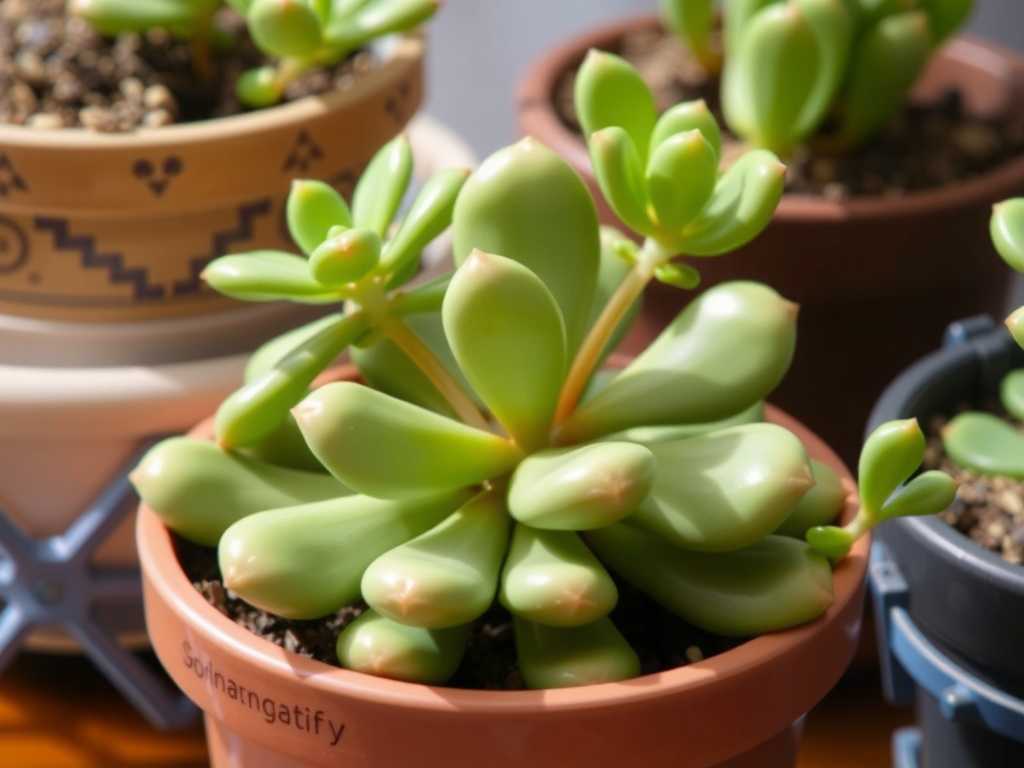
This was my biggest “aha!” moment. Jade plants love light, but direct, scorching afternoon sun is a major culprit behind slow growth.
- My Step: I moved my potted jade about three feet back from a south-facing window, still bathing it in bright, but mostly indirect, light for the majority of the day. For my outdoor plant, I used a 30% shade cloth positioned to block the intense 11 AM to 3 PM sun.
- The Mistake I Made: Initially, I moved it to a fully shaded corner. Within days, I noticed slight etiolation—the stems began stretching weakly toward the light. This was the wrong kind of growth.
- My Fix: I found the sweet spot: a location with bright, filtered light all day. Think “dappled sunlight,” like under a tree canopy.
- 2-Week Observation: The reddish tinge on the leaf edges (a sign of sun stress) faded. The leaves felt cooler to the touch and regained a firmer texture. This single change set the stage for all other improvements.
2. Mastering the “Deep Soak & Desert Dry” Watering Rhythm
Overwatering is a killer, but underwatering in heat is just as stressful. The key is deep, infrequent watering that mimics a desert downpour.
- My Step: I abandoned my weekly sprinkle. Instead, I waited until the soil was completely dry 2 inches down. Then, I placed the pot in a sink and watered slowly until water flowed freely from the drainage holes, ensuring the entire root ball was saturated. I let it drain thoroughly before returning it.
- The Mistake I Made: I assumed the topsoil drying quickly meant the whole pot was dry. I underwatered, causing the lower leaves to wrinkle excessively.
- My Fix: I started using a wooden chopstick as a moisture probe. Inserted into the soil, it comes out clean and dry when it’s truly time to water.
- 2-Week Observation: The chronic leaf wrinkling stopped. The plant looked consistently plump without any signs of squishy, yellowing leaves (overwatering). Its energy could now go toward growth, not survival.
3. Boosting Humidity Without Creating Fungal Issues
Summer air can be dry, pulling moisture from leaves. Misting is a common but flawed solution, as noted by experts from the Royal Horticultural Society (RHS), who warn it can promote fungal diseases if water sits in leaf joints.
- My Step: I created a simple humidity tray. I filled a shallow tray with pebbles, added water just below the top of the stones, and placed my jade pot on top. As the water evaporates, it creates a localized humid microclimate.
- The Mistake I Made: I placed the pot directly in the water, letting the drainage holes sit in it. This kept the soil soggy—a recipe for root rot.
- My Fix: The pebble layer is crucial. It elevates the pot above the water line, allowing for evaporation without waterlogging.
- 2-Week Observation: The leaf tips, which were slightly dry, showed no further browning. The plant simply looked fresher. This hack is vital for fixing stunted jade plant development in dry heat.
4. The “Less is More” Summer Feeding Philosophy
Fertilizing a stressed plant can burn its roots and worsen the problem. Summer feeding is about gentle support.
- My Step: I diluted a balanced, liquid succulent fertilizer (like a 10-10-10) to half the recommended strength. I applied this only once at the beginning of my two-week experiment, right after a thorough watering.
- The Mistake I Made: In the past, I’d fertilized at full strength, hoping to “jump-start” growth. This led to salt buildup in the soil and leaf burn.
- My Fix: Dilution is non-negotiable. I now view summer fertilizer as a light vitamin boost, not a full meal.
- 2-Week Observation: No fertilizer burn. Instead, I noticed a subtle brightening of the green color in new, tiny growth points at the stem tips—a sign of gentle encouragement.
5. Ensuring Breezy, Circulated Air
Stagnant, hot air encourages pests and disease. Good airflow helps cool the plant and strengthens its stems.
- My Step: Indoors, I used a small oscillating fan set on low, placed several feet away from the plant, not blowing directly on it. Outdoors, I simply ensured it wasn’t crammed against a wall or other foliage.
- The Mistake I Made: I initially pointed a strong fan directly at the plant, which caused excessive transpiration and windburn on a few leaves.
- My Fix: Indirect, gentle circulation is the goal. Think of a soft breeze, not a wind tunnel.
- 2-Week Observation: The plant’s environment felt less stifling. I saw no signs of pests like mealybugs, which thrive in still, hot conditions. This directly supports overall summer care for jade plants.
6. Pressing Pause on Repotting and Pruning
Major physical stress is the last thing a heat-stressed plant needs. Save the big interventions for fall.
- My Step: I resisted all urges to repot or do any major pruning. My focus was solely on optimizing its current environment.
- The Mistake I Made: One summer, I pruned a leggy stem to “tidy it up.” The cut stem took forever to callous and seemed to stall the entire plant.
- My Fix: If a leaf falls or a stem breaks, I cleanly remove it. Otherwise, I leave the plant structure completely alone during peak heat.
- 2-Week Observation: By not imposing additional stress, the plant could dedicate all its resources to adapting to the environmental tweaks I was making. This patience is crucial.
Seeing the Results: A Transformation in Progress
After two weeks of consistent application of these six hacks, the change was clear. The overall pallor of my jade was gone, replaced by a healthier, deeper green. The leaves were uniformly turgid. Most excitingly, at the growing tips, I spotted tiny, bright red nubs—the very beginning of new leaf pairs. This was the definitive sign that the slow growth was reversing. The plant was no longer merely surviving the heat; it was cautiously, resiliently growing through it.
Your Questions, Answered
Can I put my jade plant outside in summer? Yes, but transition it gradually. Start in deep shade for a week, then move to dappled light. Never place it in direct, hot afternoon sun. Always use a pot with excellent drainage and be vigilant about the “deep soak & desert dry” watering method. My outdoor jade thrived once I used the shade cloth.
Why are the leaves on my jade plant soft and wrinkly in summer? This is almost always a watering issue, but it requires diagnosis. If they are soft and yellowing/brown, it’s likely overwatering. If they are wrinkled, thin, and dry, it’s underwatering. Use the chopstick test to check soil moisture deep in the pot before deciding.
Should I mist my jade plant when it's hot? I don’t recommend it. As the RHS guidance suggests, misting can leave water droplets that magnify sun (causing burns) or sit in crevices (encouraging rot). The pebble tray method I described is a far safer and more effective way to increase humidity around the plant without wetting the foliage.
Watching my jade plant push out new growth during a summer heatwave was incredibly rewarding. It proved that slow growth isn’t a life sentence. By understanding the unique stresses of the season—intense light, dehydrating heat, and stagnant air—we can intervene intelligently. The path to a heat-tolerant jade isn’t about one magic trick; it’s a holistic strategy of subtle environmental shifts. Focus on filtered light, profound but infrequent watering, gentle air movement, and minimal interference. Provide that stable, supportive base, and your resilient jade will reward you with steady, healthy growth all season long.





