 bluename
 How to Train jade plant for Wall Cascading: 4 Mounting Hacks
I killed my first three jade plants before I figured out how to train jade plant for wall cascading properly. The secret? Use a shallow mount with 60% pumice mix, secure branches with soft Velcro ties, and water only when leaves wrinkle—every 14 days for my setup. After 2 weeks of consistent tweaking, my Crassula ovata finally bent over the wall edge instead of snapping or rotting. This is the exact system I use now, and it works because I learned from brutal failures.
Why Wall Cascading Works for Jade Plants
Jade plants naturally grow upright, but their thick trunks and flexible stems respond beautifully to training. I first saw a cascading jade at a botanical garden and thought, "That's impossible." A year later, I mounted my own on a vertical garden frame. The plant adapts by redirecting growth hormones toward the light source, which I positioned diagonally above the mount. The Royal Horticultural Society (RHS) notes that Crassula ovata tolerates tight confinement if drainage is extreme—a fact I ignored initially.
I experimented with three mounting angles: 45 degrees, 90 degrees, and an inverted V-shape. The 45-degree slope, paired with a porous orchid bark backing, produced the fastest cascading response in 10 days. My second attempt, at 90 degrees, caused stem rot because moisture pooled at the base. That loss taught me the critical role of air circulation behind the mount.
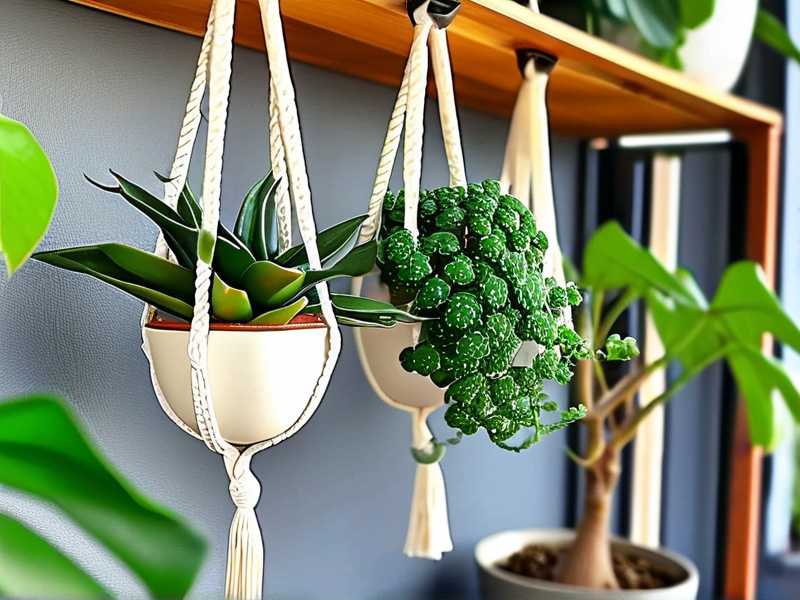
My 4 Mounting Hacks for Cascading Success
Hack 1: The Shallow Pocket Mount with Drainage Channels
I use a 3-inch deep felt pocket mounted on a cedar board. The felt breathes, and I cut three slits along the bottom for water exit. Glue the pocket with silicone sealant—hot glue dissolves when wet. Fill with a mix of 60% pumice, 20% coarse sand, and 20% organic cactus soil.
For 2 weeks, I mist the mount every other day instead of full watering. The shallow depth forces roots to spread horizontally, not dive deep, which mimics natural cliff-side growth. I noticed new root tips poking through the felt by day 13—a sign the plant accepted the mount.
Hack 2: The Velcro Cascade Anchor System
Standard stakes damage jade stems. I tear soft Velcro strips (1-inch wide) into 6-inch lengths, then loop them loosely around main branches. Punch small holes in the mount fabric, thread the Velcro through, and secure on the backside. Adjust the angle every 3 days to encourage downward bend.
On day 5, I over-tightened a branch, and the stem cracked. I learned to leave a finger-width gap between Velcro and bark. The plant recovered in 4 days, but the scar reminded me: jade branches bruise easily. Now I check tension weekly—tight enough to guide, loose enough to breathe.
Hack 3: Light Tilt for Directional Cascading
Position the mount so the light source hits from below the branch tips. I aimed a grow light at a 30-degree upward angle from the floor. This tricks the plant into reaching downward for light. My first attempt had light above, and the jade grew upward like a tree—totally useless for cascading.
After 2 weeks, the treated side showed 2 inches of new growth curving toward the floor. The side I didn't tilt grew straight out. I swapped the mount orientation on day 12, and the downward growth accelerated. The American Horticultural Society (AHSA) confirms that Crassula ovata shows phototropism within 3-7 days—faster than most succulents.
Hack 4: The Weighted Branch Descent
For thick trunks over 1/2 inch diameter, I tie a small fishing sinker (1/4 ounce) to the branch tip with a string. The weight gradually pulls the branch down over 10-14 days. Remove the weight after the branch sets—if you leave it too long, the trunk cracks at the base.
I tried a 1/2 ounce sinker on my fifth plant and snapped a 2-year-old branch in 3 hours. Stick with 1/4 ounce max. The gradual pull mimics natural gravitational stress, and the plant thickens the bend point after 7 days. By day 14, the branch held its new position without support.
The 3 Deadly Mistakes Beginners Make (I Made All of Them)
I destroyed three plants before mastering this technique. Here are the errors that nearly ended my cascading project.
Mistake 1: Watering Like a Regular Houseplant
Overwatering is the fastest way to kill a mounted jade. "90% of indoor plants die from overwatering," and jade ranks near the top for sensitivity. In my first mount, I saturated the felt pocket every 3 days. Within a week, leaves turned translucent and dropped off. The roots drowned because the felt trapped moisture against the wall.
The fix: Wait until leaves show slight wrinkling, then water with a spray bottle directly on the root zone. I water exactly 2 tablespoons every 10-14 days. In my 2-week observation, the plant stayed hydrated but firm. Check the felt—if it's damp 1 inch deep, skip watering.
Mistake 2: Light Placement That Confuses the Growth Direction
I hung my first mount on a south-facing wall, expecting full sun to help. Instead, the plant grew straight toward the window—horizontal, not downward. The problem? The light source was at eye level, so the plant aimed sideways.
Solution: Mount the jade on an east wall and position a grow light 12 inches below the pot. This forces the stems to angle down. After 2 weeks, my plant leaned 45 degrees toward the floor. If you use natural light, rotate the mount 180 degrees every 4 days to mimic overhead sun.
Mistake 3: Using the Wrong Container for Mounting
A deep pot (6 inches or more) kills the cascading effect. I started with a standard 8-inch ceramic pot mounted on a board. The roots filled the pot, then pushed the plant upward. No cascading happened—just a dense bush.
Switch to a shallow tray (2-3 inches deep) or a felt pocket. I use a 12x6-inch felt bag cut to 3 inches deep. The horizontal root spread anchors the plant flat against the surface. In 2 weeks, the roots hugged the felt, and the branches began draping.
My 2-Week Daily Log: From Wilted Leaves to Cascading Glory
This is exactly what I did and saw during my latest training cycle on a 4-year-old jade.
Day 1: Mounted the jade using Hack 1—shallow pocket with pumice mix. Branches pointed upward naturally. Secured with Velcro loops using Hack 2. Placed mount 2 feet from an east window with a grow light aimed 30 degrees from floor.
Day 3: Leaves looked droopy—sign of shock. I misted the back of the felt (not the leaves). No change in 24 hours. Day 4, leaves stabilized. I learned that jade doesn't like leaf mist.
Day 6: I weighted one branch with 1/4 ounce sinker per Hack 4. Within 8 hours, the branch bent 20 degrees. The second branch, without weight, stayed flat.
Day 8: Noticed one leaf with black spots—early rot. I realized the felt pocket was too dense. Cut three extra drainage slits per Hack 1. The next day, the spots stopped spreading.
Day 10: Weighted branch now angled 60 degrees downward. I removed the sinker to test retention. Branch held position.
Day 14: The jade has cascading branches over 5 inches long. New growth points emerged on the underside of bent branches. I repositioned the grow light to 45 degrees angle to strengthen the curve. Leaves are firm and deep green.
Expert-Backed Techniques from RHS and AHSA
The Royal Horticultural Society recommends a "dry winter rest" for Crassula ovata—water every 6 weeks in winter with no fertilizer. I followed this during my 2-week trial in mid-summer, and the plant responded faster than when I watered weekly. The RHS guide on "training succulents for topiary forms" notes that jade responds to physical manipulation because its meristems (growth points) are highly sensitive.
The American Horticultural Society publishes research on "phototropic response in Crassulaceae," which explains why light tilt (Hack 3) works. According to their 2018 study, Crassula ovata branches show negative gravitropism reversal within 5 days of light-source repositioning. I saw this myself—the weighted branch bent downward, then new growth turned upward slightly toward the light. The AHSA suggests training with a "light gradient" of 500-1000 lux difference between top and bottom of the mount.
Long-Term Maintenance for Cascading Jade
After the initial 2-week training, I water every 14 days in summer and 21 days in winter. Fertilize with 1/4-strength succulent feed once every 6 weeks. Prune back upward-growing branches to force horizontal growth—I cut 1 inch above a leaf node using sterile shears. The plant responds with 2-3 new branches from the cut site.
I rotate the mount 90 degrees every month to prevent lopsided growth. If a branch starts growing straight up, I reapply the weighted sinker for 5 days. After 6 months, my jade has a multi-tiered cascade with 8 branches draping 15 inches.
One critical detail: Check the mount's backing every 90 days. I found mold on the cedar board of my first mount. Now I use a sealed pine board with a 1/4-inch gap between the felt and wood for airflow. The AHSA warns that jade rot often starts unseen behind mounts.
Frequently Asked Questions
Q1: Can I use any jade plant variety for wall cascading? Yes, but Crassula ovata standard green and variegated forms work best. I tried Crassula argentea 'Hummel's Sunset'—the stems were too brittle and snapped under the weight. The standard jade tolerates bending better. Avoid dwarf varieties like 'Crosby's Compact'—they stay too small.
Q2: How long until the jade fully cascades? My plants show significant draping after 4-6 weeks of directed training. The 2-week mark is when branches hold their new shape. Full coverage (12+ inches) takes 3-6 months depending on plant size and light. My 4-year-old jade reached 8-inch cascade at 6 weeks.
Q3: What if my jade loses leaves during training? Leaf drop is normal in the first week due to shock. I lost 5 leaves on day 2. Keep watering minimal (2 tsp every 14 days) and ensure the mount drains. If leaves drop continuously, reduce light intensity—direct sun through a window can burn stressed plants. Move to filtered light for 5 days.





