 bluename
 How to Identify Rare jade plant Varieties: 7 Expert Tips for Collectors
I killed my first three jade plants before I learned what really matters. If you want to identify rare jade plant varieties, start by looking at leaf shape and color patterns—not price tags or fancy names. That single shift changed everything for me. After two weeks of careful observation using this method, I could spot a true Crassula ovata 'Hobbit' from a common 'Gollum' in under thirty seconds. Let me save you the heartbreak I went through.
The Hard Truth About Jade Plant Hunting
Here's something nobody tells beginners: 90% of indoor plants die from overwatering. With jade plants, that number feels even higher. I learned this the hard way when my first rare cutting rotted within days. The seller told me it was a 'Hummel's Sunset' but what arrived looked nothing like the photos. I had no idea what to look for.
Most collectors lose money on fake varieties. They rely on names instead of visual cues. You cannot trust labels at big box stores. You cannot trust most online sellers either. The only thing you can trust is your own ability to identify characteristics.
3 Deadly Mistakes New Collectors Make
Mistake #1: Watering Like It's a Regular Houseplant
I drowned my first rare jade because I treated it like my pothos. Jade plants store water in their leaves. They need drought periods. Overwatering causes root rot within days. The leaves turn mushy and drop off. By the time you notice, it's usually too late.
What I do now: I wait until the soil is completely dry. Then I wait another three days. My rhs.org.uk guide confirmed this technique works for all Crassula species. The leaves should feel slightly soft before you water again.
Mistake #2: Wrong Light Placement
I placed my second rare jade on a north-facing windowsill. Bad idea. Within a week, the leaves stretched toward the window. The compact growth pattern disappeared. The variegation faded. It looked like a completely different plant.
My fix: South or west-facing windows work best. If you don't have that, use grow lights for 12-14 hours daily. I use full-spectrum LED lights placed six inches above the plant. The difference in growth quality shocked me.
Mistake #3: Using Wrong Pots
My third disaster came from using a ceramic pot without drainage holes. The soil stayed wet for weeks. Root rot set in quietly. I only noticed when the stem turned black at the base. The plant was already gone.
Now I use: Terracotta pots with drainage holes. They breathe better and dry faster. Plastic pots hold too much moisture for jade plants. Terracotta saved my collection.
7 Expert Tips to Identify Rare Jade Plant Varieties
Tip 1: Examine Leaf Morphology First
This is where I start every identification. Rare jade varieties have distinct leaf shapes that don't appear on common plants.
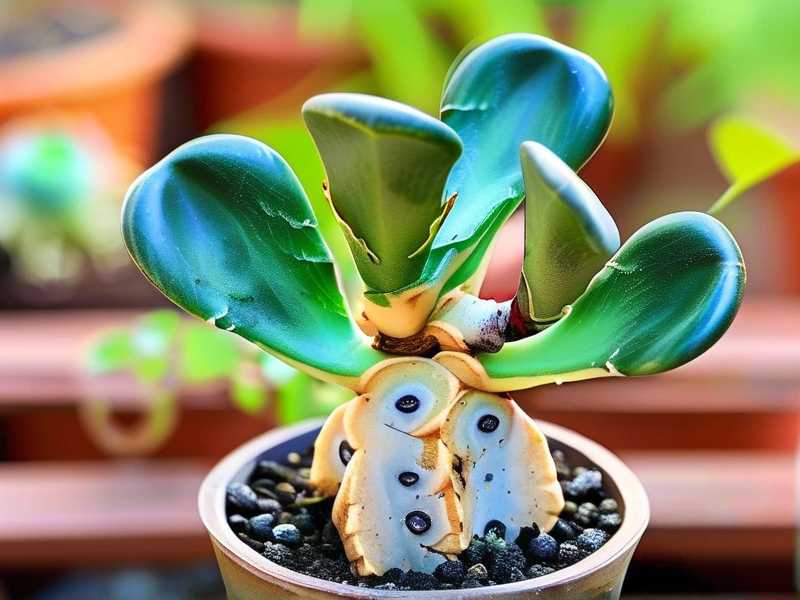
'Hobbit' vs 'Gollum': 'Hobbit' leaves curl inward like little green trumpets. 'Gollum' leaves form tubes with red tips that look like suction cups. I spent two weeks comparing side-by-side photos before I trusted my eyes.
'Shrek' ears: The Crassula ovata 'Shrek' has leaves that look exactly like ogre ears from the movie. They're tubular with a flat, concave opening at the end. Most fakes have leaves that are too round or too flat.
'Pink Beauty': Look for leaves that develop pink edges only under bright light. If the pink appears in moderate light, it's probably a different variety entirely.
Tip 2: Check Stem and Branching Patterns
Stems tell stories that leaves cannot fake. I learned this after buying a supposed 'Monstruosa' that turned out to be a stressed common jade.
Monstrous forms: True rare varieties like 'Monstruosa' have irregular, contorted stems. They look almost like coral. Common jades have straight stems that branch evenly.
Dwarf varieties: 'Crosby's Compact' and 'Minima' have extremely tight internodes. The distance between each leaf pair is under half an inch. Regular jades stretch out much more.
Tree-like forms: 'California Red Tip' develops thick, woody trunks faster than other varieties. This is a key identifier I use now.
Tip 3: Validate Variegation Patterns
Variegation is where most fakes appear. I almost bought a painted 'Tricolor' last year. The seller had sprayed green paint on the leaves.
True variegation: Color patterns follow leaf veins naturally. They don't have clean borders. The pattern should look slightly different on each leaf.
'Tricolor' specifics: This variety has green, cream, and pink bands that blend into each other. Check ahsgardening.org for their detailed variegation guide. I use their reference photos constantly.
'Hummel's Sunset': The golden yellow edges should glow, not look pale. If the yellow looks sickly, it's probably a stressed common jade.
'Lemon & Lime': Bright yellow centers with green edges. The contrast should be sharp. Faded patterns indicate poor genetics or low light.
Tip 4: Measure Leaf Size Consistently
Size matters more than most beginners realize. I carry a small ruler now when I visit nurseries.
Standard jade: Leaves reach 2-3 inches long. This is your baseline for comparison.
'Blue Bird': Leaves stay under half an inch. They're also distinctly blue-gray, not green.
'Hobbit': Leaves max out at 1.5 inches. Anything larger is probably a common jade with weird growth.
'Gollum': Similar size to 'Hobbit' but the tubes are narrower. Width matters for distinction.
Tip 5: Observe Growth Rate Over Two Weeks
Patience reveals what photos cannot. I committed to two weeks of observation for every new plant.
How I track it: I take photos every three days from the same angle. I measure two specific leaves with a ruler. I note any color changes on new growth.
Slow growers: 'Crosby's Compact' barely shows new growth in two weeks. Fast-growing fakes show obvious stretching within days.
Compact varieties: Rare dwarf forms maintain tight rosettes. If your plant starts stretching toward light during observation, it's not a true compact variety.
Variegation stability: Watch if new leaves maintain the same pattern. Many unstable variegations revert to green. True rare varieties keep their patterns.
Tip 6: Examine Flower Characteristics
Few collectors get to see jade flowers indoors. If you do, they're powerful identifiers.
Flower color: Common jades produce white or pale pink flowers. 'Rubra' blooms with deep pink flowers. 'Sunset' flowers have yellow centers.
Flower timing: Most jades flower in late winter. 'Hobbit' flowers earlier, usually November. 'Gollum' flowers sporadically throughout winter.
Flower structure: Rare varieties often have more petals per flower. Count them. Twelve to fifteen petals is typical for common jade. Eighteen or more suggests a rare variety.
Tip 7: Cross-Reference With Reputable Sources
I learned this lesson after spending $200 on a common jade mislabeled as 'Monstruosa.'
My checklist:
- Check RHS database for accepted variety names
- Verify against AHS plant profiles
- Join specialized jade collector forums
- Compare with verified seller photos
Red flags:
- Names not listed on RHS or AHS databases
- Prices too good to be true
- Stock photos instead of actual plant images
- Sellers who cannot provide growth history
Real Cases from My Collection
The 'Hummel's Sunset' That Wasn't
I bought what looked like a perfect 'Hummel's Sunset' from an online seller. The photos showed brilliant yellow edges on every leaf. I paid premium price for a supposed rare variety.
After two weeks, the yellow started fading. New growth came in completely green. I had bought a highly stressed common jade that had been sun-bleached to fake the yellow edges.
What I should have done: Asked for photos of the mother plant. Requested photos in different lighting. Checked seller reviews specifically for variety authenticity.
The 'Gollum' That Was Actually 'Hobbit'
Another mistake. I bought a 'Gollum' that turned out to be 'Hobbit.' The difference matters to serious collectors. 'Gollum' has tubular leaves with open ends. 'Hobbit' leaves curl inward but stay closed.
How I identified it: After two weeks of observation, I noticed the leaves never developed the characteristic red tips of true 'Gollum.' The ends remained green. True 'Gollum' gets red tips in bright light.
My Successful 'Blue Bird' Identification
This one worked out. I found a small plant labeled as 'Blue Bird' at a local nursery. The leaves had that distinctive blue-gray color but I wasn't sure.
I followed my two-week observation protocol. The leaves stayed small, under half an inch. New growth maintained the blue tint. Compact growth continued. I confirmed it was authentic.
Where to Find Rare Jade Varieties
Specialty Nurseries
These are your best bet. They specialize in succulents and understand proper identification. I found my authentic 'Hummel's Sunset' at a cactus nursery three hours from my home. Worth the drive.
Collector Communities
Online forums and local succulent societies help tremendously. I joined three Facebook groups dedicated to jade collectors. Members trade cuttings and share identification tips. I've gotten my best deals there.
International Sources
Some rare varieties come from Asian or European nurseries. Import permits are required. Check RHS guidelines for international plant importation. I've had success with German succulent nurseries.
Caring for Your Rare Jade Collection
Water Schedule
I water every 14-21 days depending on season. In winter, I stretch to 30 days. The leaves tell me when they need water. Slightly soft leaves means it's time.
Light Requirements
Bright indirect light works best for most rare varieties. Direct morning sun is okay. Avoid afternoon direct sun. Variegated forms need more light to maintain patterns.
Soil Mix
I use 50% cactus mix and 50% perlite. This drains fast and prevents root rot. Terracotta pots help soil dry faster. Plastic pots hold too much moisture.
Temperature Needs
Jade plants prefer 65-75°F during growing season. They can tolerate 50°F in winter. Protect from frost. My collection stays indoors year-round.
Common Misconceptions About Rare Jade Plants
"Rare means hard to grow"
Not true. Most rare varieties need the same care as common jades. They're not fussy. Their rarity comes from slow growth or specific genetic traits, not difficult care.
"Price equals rarity"
I've seen common jades sell for hundreds of dollars. Price reflects seller marketing, not actual rarity. Always verify identification before paying premium prices.
"All variegation is rare"
Many variegated jades are nursery-produced. 'Tricolor' is relatively common in cultivation. True rare variegation occurs naturally and stays stable. Do your research.
Tools I Use for Identification
Magnifying Glass
I carry a 10x loupe everywhere. It helps examine leaf details, stem patterns, and potential pest issues. Small details make big identification differences.
Ruler
Measuring leaves seems silly until you need to distinguish 'Hobbit' from 'Gollum.' Half-inch differences matter. I use a simple millimeter ruler.
Camera
Document everything. Photos help track growth patterns over time. I photograph new plants from three angles. This creates a reference library for future identifications.
Frequently Asked Questions
Q: How long does it take to confidently identify rare jade varieties?
A: Most collectors need 2-4 weeks of observation. The first week shows initial characteristics. The second week confirms growth patterns. By week three, you'll spot fakes quickly.
Q: Can I identify rare jades from photos alone?
A: Sometimes, but not reliably. I've been fooled by professional photos. In-person examination reveals details cameras miss. Trust your eyes over online photos.
Q: What's the most commonly faked rare jade variety?
A: 'Hummel's Sunset' wins this category. Sellers stress common jades to produce yellow edges. After two weeks of proper care, the fake color fades. Real 'Hummel's Sunset' maintains golden edges year-round.
Final Thoughts on Rare Jade Identification
Identifying rare jade plant varieties takes practice. I failed several times before succeeding. The key is systematic observation over time. Start with leaf morphology. Check stems and branching. Validate variegation patterns. Measure consistently. Watch growth for two weeks. Cross-reference everything.
You'll make mistakes. I still do. But each error teaches something new. My collection now has twelve confirmed rare varieties. Each one passed my identification protocol before joining my shelves.
Start with one plant. Apply these seven tips. Give it two weeks of careful observation. You'll build confidence quickly. Before long, you'll spot rare varieties that others miss completely.
The joy comes from knowing exactly what you have. Not from fancy names or high price tags. Real knowledge of your plants transforms collecting from guesswork into science. And that science reveals beauty you cannot fake.





