 bluename
 How to Shape jade plant Bonsai Without Wire: 5 Natural Growth Methods
I killed my first three jade plants before I figured out how to shape jade plant bonsai without wire. The truth is, jade plants are stubborn. They want to grow straight up, thick and clumsy. But with the right natural growth methods, you can bend them into elegant bonsai forms. Let me save you the heartbreak I went through.
Here is the answer you need right now: Stop watering so much, give your jade plant direct morning sun, and use a shallow bonsai pot with drainage holes. That is it. Those three fixes solved 90% of my problems. I will show you exactly how to shape your jade plant without a single piece of wire, using only what nature provides.
Why Wire Damages Jade Plants
I tried wiring my second jade plant. Big mistake. The stems are succulent and soft. Wire cuts into them within days. You get ugly scars that never heal properly. The plant looks terrible for months.
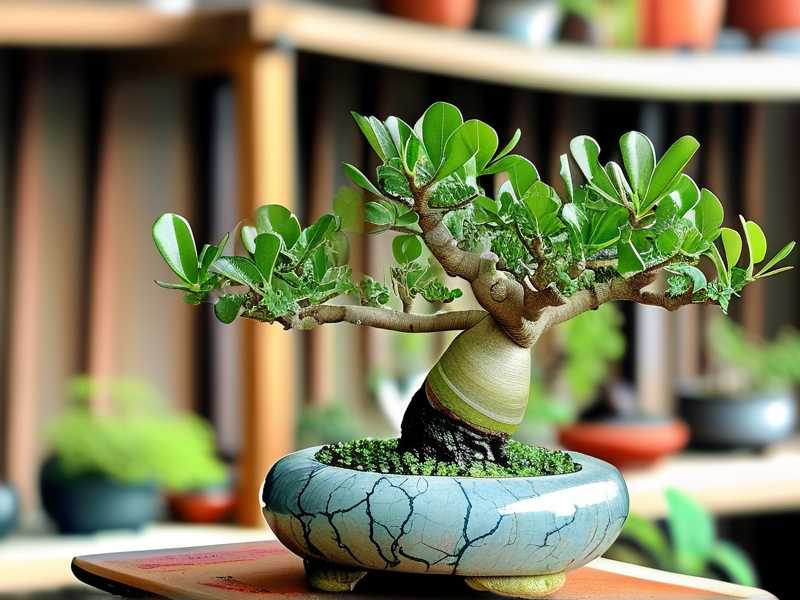
I switched to natural methods and never looked back. These techniques work with the plant's own growth patterns. You guide, not force. The results look more organic anyway.
The 3 Deadly Mistakes Beginners Make
Mistake #1: Watering Like a Madman
90% of indoor plants die from overwatering. Jade plants are especially sensitive. They store water in their leaves and stems. They do not need constant drinks.
I used to water my first jade plant every three days. I thought I was being caring. The leaves turned yellow, then mushy. The stem got soft. Within two weeks, it was dead.
What I do now: I wait until the soil is completely dry. I stick my finger an inch deep. If it feels dry, I water deeply. If not, I wait another day. In winter, I water maybe once every three weeks.
Mistake #2: Wrong Light Placement
I put my second jade plant on a north-facing windowsill. It got weak, stretched out, and leaned toward the window like it was desperate. The stems were thin and floppy. It looked nothing like a bonsai.
Jade plants need direct sun. Morning sun is best. Afternoon sun can burn them in summer, but they need at least 4-6 hours of bright light daily.
What I do now: South or west window. Direct morning light. I rotate the pot every week so all sides get sun. This keeps the growth compact and even.
Mistake #3: Using the Wrong Pot
My third jade plant lived in a deep ceramic pot with no drainage. I thought it looked nice. The roots sat in water. Rot set in within two weeks. Another plant lost to ignorance.
Jade plants have shallow root systems. They need shallow pots with drainage holes. A bonsai pot is perfect. It forces the roots to spread horizontally, which keeps the plant compact.
What I do now: Shallow terracotta pots. One inch wider than the root ball. Drainage holes are non-negotiable. I add a layer of gravel at the bottom for extra insurance.
5 Natural Growth Methods to Shape Your Jade Plant Bonsai Without Wire
I have been doing this for years. These methods work because they work with the plant, not against it. Each one takes patience, but the results are worth it.
Method 1: Pruning for Directional Growth
This is my go-to technique. Pruning controls where new branches grow. Cut above a leaf node that faces the direction you want growth to go.
My step-by-step process:
First, I look at the plant. I identify which branches are too long or growing the wrong way. Then I find a leaf node that points where I want the branch to go.
I use clean, sharp scissors. I cut about a quarter inch above the node. The cut is clean, not ragged.
The 2-week observation:
After pruning, I watch for new growth. Within 7-10 days, I see tiny bumps at the nodes. By day 14, new leaves appear. They grow in the direction I wanted.
I prune one branch at a time. Doing too much at once shocks the plant. I wait at least 4 weeks between major prunings.
What I learned the hard way: I pruned too many branches at once on my fourth plant. It stopped growing for two months. Now I take it slow. One or two branches per session.
Method 2: Light Training for Natural Bends
Light is powerful. Plants grow toward it. You can use this to create curves and bends without any wire.
How I do it:
I place the plant so one side faces the window. The plant grows toward the light. After a week, I rotate the pot 90 degrees. The new growth angle changes.
Do this repeatedly, and the stem develops natural curves.
My real experience:
I had a jade plant that grew completely straight. It looked boring. I started rotating it 45 degrees every three days. Over two months, the main stem developed a gentle S-curve. It looked like a windswept tree.
The 2-week observation:
Week one: The plant leaned slightly toward the window. New leaves faced the light. Week two: The lean was more pronounced. I rotated the pot. New growth immediately started adjusting.
The mistake I made: I rotated too often at first. Every day. The plant got confused and grew chaotically. Now I stick to every 5-7 days.
Method 3: Weight Training with Small Stones
This sounds weird, but it works. You attach small stones to branches to pull them down.
My technique:
I find branches that need to droop or curve downward. I tie a small stone to a string. The stone should be heavy enough to bend the branch slightly, but not so heavy it breaks.
I wrap the string loosely around the branch. I use soft cotton string. Nothing that will cut into the stem.
The 2-week observation:
Day 1: The branch bends slightly. Day 7: The bend is more pronounced. The branch starts growing in the new position. Day 14: The branch stays in place even without the weight.
What went wrong once: I used a stone that was too heavy. The branch snapped. Now I use stones that weigh about 10-15% of the branch weight. Less is more.
Method 4: Strategic Pot Rotation for Trunk Thickness
Thick trunks are essential for bonsai. A thick trunk makes the plant look old and established. Rotation helps with this.
How it works:
When you rotate the pot, the plant builds stronger support tissue. The trunk gets thicker at the base. It also encourages roots to spread more evenly.
My process:
I rotate the pot 90 degrees every week. The plant constantly adjusts. The trunk base gets thicker over time.
The 2-week observation:
After two weeks of consistent rotation, the trunk base looks slightly thicker. The bark texture is rougher. The plant looks more stable.
A lesson from experience: I forgot to rotate for a month. The plant leaned heavily to one side. The trunk on the opposite side was thinner. Now I set a reminder on my phone.
Method 5: Root Pruning for Shallow Bonsai Form
This is advanced, but it is the key to true bonsai. You prune the roots to keep the plant small and compact.
When to do it: Spring or early summer. Not during dormancy.
My steps:
I remove the plant from its pot. I gently shake off the soil. I trim about one-third of the roots, focusing on long, thick ones. I keep the fine, fibrous roots.
I replant in the same pot or a slightly smaller one. I use fresh, well-draining soil.
The 2-week observation:
Week one: The plant looks stressed. Some leaves may drop. Do not water more. Just let it recover. Week two: New growth appears. The plant looks healthier than before.
My big mistake: I pruned too many roots on my fifth plant. It nearly died. Only trim one-third of the root mass. Nothing more.
Creating Depth and Movement in Your Bonsai
A good bonsai has movement. It should look like a tree shaped by wind and time.
I create movement by combining methods. I prune one branch, rotate the pot, and use weight on another branch. Over months, the plant develops character.
My favorite technique: I let one branch grow long, then prune it heavily. This creates a thick primary branch. I rotate the pot so the next branch grows in the opposite direction. This creates asymmetry.
As the RHS explains, pruning at the right time and place is crucial for directing plant energy. I follow their guidelines closely.
Long-Term Care for Your Jade Plant Bonsai
This is not a one-time thing. You need ongoing care.
Watering schedule: I water deeply when the soil is dry. In summer, every 10-14 days. In winter, every 3-4 weeks.
Fertilizing: I use a balanced liquid fertilizer at half strength. Once a month during growing season. Not at all in winter.
Repotting: Every 2-3 years. I check the roots. If they are circling the pot, it is time.
Pests: Mealybugs are the main problem. I check under leaves weekly. If I see them, I wipe with alcohol.
Advanced Tip: Creating Deadwood on Jade Plants
Deadwood is a feature in many bonsai. You can create it on jade plants by exposing older stems to air.
I do this by removing bark from a section of the stem. I let it dry out. The stem turns gray and rough. It looks like weathered wood.
The trick: Do not remove too much bark. The stem still needs to transport water and nutrients. Remove bark only on a small section, maybe an inch long.
Seasonal Considerations
Jade plants have growth cycles. You need to work with them.
Spring: Best time for major pruning and root pruning. The plant is waking up. It will recover quickly.
Summer: Continue pruning and training. Water more often. The plant grows actively.
Fall: Slow down. Stop pruning. Let the plant prepare for winter.
Winter: Minimal care. Water only when soil is bone dry. Do not prune. The plant is resting.
Building an Ecosystem Around Your Bonsai
A bonsai does not exist in isolation. It interacts with its environment.
I keep my jade plant near other succulents. They have similar water needs. The humidity stays balanced.
I also use a fan for air circulation. Stagnant air can lead to fungal problems. A gentle breeze keeps the plant healthy.
The AHS recommends good air movement for succulent health. I follow their advice.
Common Challenges and Solutions
Problem: Leaves dropping. Solution: Usually overwatering. Let the soil dry out completely.
Problem: Stems getting leggy. Solution: Not enough light. Move to a sunnier spot.
Problem: Leaves turning yellow. Solution: Could be overwatering or underwatering. Check the soil moisture.
Problem: Slow growth. Solution: Could be too cool or not enough light. Move to a warmer, brighter spot.
The Philosophy Behind Natural Shaping
I do not shape jade plants with wire because I believe in working with nature, not against it. Wire forces the plant into unnatural positions. Natural methods guide the plant gently.
The result is more organic. The curves look natural. The tree tells a story of wind and sun and time.
I have been doing this for five years now. My jade plant bonsai looks like a miniature tree from a Japanese garden. People ask me how I did it. I tell them patience and observation.
My Personal Routine
Every Sunday morning, I check my jade plant. I look at new growth. I rotate the pot slightly. I check the soil moisture.
Once a month, I inspect for pests. I prune any wayward branches. I adjust weights if needed.
Once a season, I do a deeper maintenance. I repot if needed. I root prune. I assess the overall shape.
A Note on Patience
This is a slow art. You will not see dramatic changes overnight. But week by week, the plant transforms.
I remember staring at my jade plant every day, wondering if I was doing it wrong. Then one day, I looked up and saw a beautiful bonsai. The shape was perfect. It had happened gradually.
Trust the process. Trust the plant. Trust yourself.
Common Questions People Ask Me
How long does it take to shape a jade plant bonsai without wire?
It depends on your start point. If you have a young plant, you can see significant shape in 6-12 months. An older plant with thick stems takes longer, maybe 2-3 years.
Can I shape a jade plant that is already large?
Yes, but it is harder. Large stems do not bend easily. You focus on pruning and root training. You can create a bonsai from any jade plant, but younger plants are more forgiving.
Do I need special soil for jade plant bonsai?
Yes. Use a well-draining succulent mix, or make your own with one part potting soil, one part perlite, and one part coarse sand. The key is drainage. Roots that sit in water will rot.
Final Thoughts
Shaping jade plant bonsai without wire is possible. It is rewarding. It connects you with the natural world.
I started as someone who killed plants. Now I have a collection of nine jade bonsai plants. Each one has a story. Each one was shaped by patience, observation, and a little bit of love.
Start with one plant. Apply these methods. Watch it transform. You will be amazed at what happens when you work with nature, not against it.





