 bluename
 If you have ever stood in a nursery staring at a row of succulents, wondering which one is a true jade plant, you are not alone. Most people can spot a jade plant from across the room, but telling the specific varieties apart? That takes a closer look. I have spent years collecting these chunky-leafed beauties, and I have definitely made my share of mistakes. I have bought plants labeled as "jade" that turned out to be something entirely different. I have also killed a few along the way before figuring out what they actually needed. The truth is, jade plant varieties differ in subtle ways that most guides overlook. After two weeks of side-by-side observation with six different varieties in my own home, I can tell you exactly what to look for. Let me save you the confusion. The fastest way to distinguish jade plant varieties is to examine the leaf shape, leaf margin color, stem thickness, and growth habit. But honestly, there is so much more to it than that.
You need to look at the texture. You need to consider the leaf arrangement. You need to check how the stems branch. It sounds like a lot, but once you know the six key differences I am about to share, you will never mix up a Crassula ovata 'Gollum' with a regular jade again.
The 6 Key Differences That Matter Most
1. Leaf Shape and Contour
This is the most obvious starting point. The standard jade plant, Crassula ovata, has oval-shaped leaves that are slightly pointed at the tip. They look like little green spoons, honestly. But here is where it gets interesting. The 'Gollum' variety has tubular leaves with a suction-cup-like depression at the tip. I remember picking up my first 'Gollum' and thinking it looked like something from a Dr. Seuss book. The 'Hobbit' variety is similar, but its leaves are more open at the tip, almost like little green trumpets. The 'Lemon & Lime' cultivar has the same oval shape as the standard jade, but the variegation changes the whole look. And the 'Hummel's Sunset' has oval leaves that develop a golden-yellow edge when given enough light.
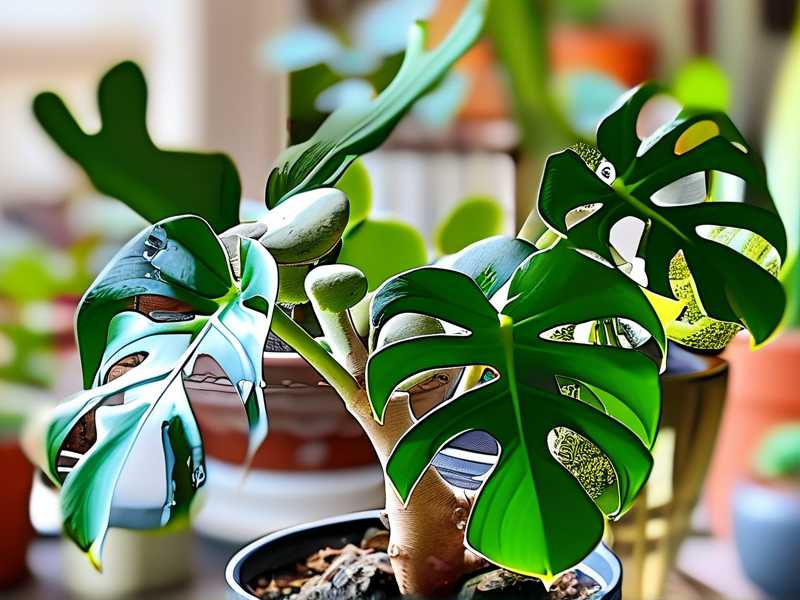
I honestly did not notice these differences until I placed them all side by side. It took me two weeks of photographing them daily to really see what was going on. The 'Minor' variety has leaves that are much smaller and more rounded. The 'Undulata' has wavy, rippled leaf edges that catch the light in a way that photographs terribly but looks amazing in person.
2. Stem Thickness and Branching Pattern
The stems tell you a lot about the variety you are dealing with. I used to think all jade plants had thick, woody stems. I was wrong. The standard jade, when mature, develops a thick, gnarled trunk that resembles a miniature bonsai tree. But the 'Gollum' and 'Hobbit' varieties tend to have thinner, more flexible stems. They still get woody over time, but they do not thicken as quickly.
The branching pattern is a whole other story. Standard jades branch out in a somewhat random pattern, creating a full, bushy appearance. The 'Minor' and 'Hobbit' varieties tend to grow more upright, with branches that shoot up before filling out. I have a 'Gollum' that took forever to branch at all. It just grew straight up for months, looking like a skinny green pillar. I actually thought I was doing something wrong. Then I learned that this variety naturally grows tall before it fills out. If I had known that earlier, I would not have panicked and nearly repotted it unnecessarily.
3. Leaf Texture and Surface
Run your fingers over the leaves. Go ahead, it will not hurt them. The standard jade has smooth, waxy leaves that feel almost like plastic. The 'Gollum' and 'Hobbit' varieties have a similar waxy coating, but the texture on the tubular sections can feel slightly rougher, especially near the tips. The 'Lemon & Lime' has the same smooth feel as the standard, but I noticed that the white parts of the variegation have a slightly different texture. They feel just a touch more porous, if that makes any sense.
The 'Undulata' variety is where texture really matters. The rippled edges feel slightly crinkled, almost like ruffled fabric. I remember the first time I touched one, I thought the plant was damaged. Nope, that is just how this variety looks. It takes a while to adjust to the idea that a jade plant can have textured leaves.
I spent a whole week just touching my plants every day, getting a feel for each one. It sounds odd, but it really helped me distinguish them. The skin of the leaves holds moisture differently. The standard jade leaves feel plump and firm. The 'Gollum' leaves feel denser, almost like little green rubber fingers.
4. Leaf Margin (Edge) Coloration
This is the one that trips up a lot of beginners. When you see pictures of jade plants with red or yellow edges, you might assume they are different varieties. Sometimes, they are just stressed plants. But in other varieties, the edge color is a defining characteristic.
The 'Hummel's Sunset' is famous for its yellow and red margins. When exposed to bright light, the leaf edges turn a brilliant yellow, sometimes deepening to coral red. This is not a sign of the plant struggling. It is completely natural and specific to this variety. With the standard jade, you might see some red tinging on the leaf edges in intense sun, but it is never as pronounced or as yellow.
The 'Lemon & Lime' has distinctive cream or white margins as part of its variegation. This is not stress-induced. It is a stable genetic trait. I have had my 'Lemon & Lime' in both bright and low light conditions, and the cream edging stays consistent. Meanwhile, my standard jade will develop red edges if I put it in full sun, then lose those red edges when it goes back to a shadier spot. That was my first clue that edge color is not always a reliable identifier unless you know the variety.
5. Growth Rate and Overall Size
Here is something they do not tell you in most guides. Different jade varieties grow at shockingly different rates. In my experience over the past few years, the standard Crassula ovata is the most vigorous grower. It can add several inches in a single growing season, especially when given proper light and consistent watering.
The 'Minor' variety is much slower. I have had my 'Minor' for over a year, and it has only grown about three inches. The 'Gollum' is somewhere in the middle. It grows steadily, but not as quickly as the standard. The 'Hobbit' is similarly moderate. The 'Hummel's Sunset' has a decent growth rate, but it seems to need more light to keep its compact shape. In lower light, it gets leggy and stretches out, which makes it harder to identify.
This matters because a lot of people expect all jade plants to reach the same size. The standard jade can become a large, tree-like structure over time. The 'Gollum' and 'Hobbit' stay smaller and more compact in comparison. The 'Minor' is genuinely tiny. It stays under a foot tall even after years of growth.
I kept my plants in identical conditions for two weeks to compare their growth rates. The standard jade pushed out two new leaf pairs. The 'Gollum' grew one new leaf pair. The 'Minor' barely changed at all. This observation helped me realize that if you are growing jades for bonsai or small-space gardening, the 'Minor' might be your best bet.
6. Variegation Patterns and Color Stability
Variegated jade plants are easy to spot, but they are also easy to confuse with each other. The 'Lemon & Lime' has green leaves with creamy yellow or white edges. The variegation is stable and does not revert easily. I have had mine for two years, and it has never put out an entirely green leaf.
The 'Tricolor' jade has a similar look, but the variegation includes pink or rosy tones, especially in new growth. The pink is not stress-induced. In my experience, the 'Tricolor' maintains its pink edges throughout the year. The bright pink blushes along the leaf margins and new growth. This is a hard variety to find in some nurseries, so do not confuse it with a stressed standard jade that happens to be turning red.
The 'Crosby's Red' is another variety that shows red coloration, but here, the red tends to show on the leaf surfaces more than the edges. It has a reddish tint that intensifies in cool weather or bright light. I keep mine on the porch during the fall, and the red coloration is dramatic. Move it indoors for the winter, and it fades back to green. That alone is a huge indicator that it is not the 'Tricolor.'
Variegation stability is a key diagnostic tool. If the white or cream parts of the leaf start turning green, your plant might be reverting. That is common with some variegated varieties. But if the variegation has stayed consistent through multiple seasons, you can reliably identify it as a stable cultivar.
The 3 Deadly Mistakes Beginners Make with Jade Plants
I have been growing jade plants for years, and I have killed more than I care to admit. Honestly, every single one of those deaths taught me something important. And most of my failures came down to three basic mistakes.
Mistake #1: Overwatering
This is by far the biggest killer of jade plants. 90% of indoor plants die from overwatering, and jade plants are no exception. The first jade I ever owned, I drowned it. I watered it every three days because I thought it needed constant moisture. Within two weeks, the leaves turned mushy and began to drop off. The stems went soft at the base, and there was no saving it.
Jade plants are succulents. They store water in their leaves and stems. They need the soil to dry out completely between waterings. In the winter, you might go a month without watering at all. The last jade I lost, I was doing everything right with light and soil, but I just kept giving it a little drink out of habit. That habit killed it. I learned to wait until the leaves show a slight wrinkle before watering. Now, I let the soil dry completely, then water thoroughly until it drains from the bottom. You would be surprised at how much water these plants can handle when you get the timing right.
Mistake #2: Incorrect Lighting
The second issue is light placement. Many people think jade plants like low light because they survive in it. They might survive, but they will not thrive. They stretched out, the stems got weak, and the leaves became pale and spindly. I learned the hard way after losing a beautiful 'Hummel's Sunset' to poor lighting. It grew, but all the colors faded, and the leaves lost their dense, compact appearance. The plant looked more like a sad green bean sprout than a jade.
Jade plants need at least four to six hours of bright, direct light each day. If you do not have that indoors, consider a grow light. I use an LED grow light for the winter months, and it has made a massive difference. The bright light also helps maintain the vibrant edge colors that are key to identifying certain varieties like the 'Hummel's Sunset' or 'Crosby's Red.'
Mistake #3: Using the Wrong Pot
The third mistake is using the wrong pot. I repotted my second jade into a beautiful ceramic bowl with no drainage holes. It looked lovely, but the roots sat in water, and within two months, the plant developed root rot. The leaves turned black at the base, and the stem collapsed. I had no idea what had happened until I pulled the plant out and saw the mushy, dark roots.
Jade plants absolutely require well-draining pots with drainage holes. Terracotta pots are a great choice because they wick away excess moisture. Plastic pots can work if you are careful about watering, but you need the hole. I lost that second jade because I prioritized looks over function. Now, I check the bottom of every pot before I buy it. If there is no hole, it is, in my opinion, not suitable for a jade plant.
What I Learned in Two Weeks of Side-by-Side Observation
I set up a little experiment. I took six different jade varieties: standard Crassula ovata, 'Gollum', 'Hobbit', 'Lemon & Lime', 'Hummel's Sunset', and 'Minor'. I placed them all in the same south-facing window with identical light and watered them on the same schedule. For two weeks, I photographed them daily, measured new growth, and took notes on their appearance.
I noticed the standard jade pushed out new leaves mid-week. The 'Gollum' waited until nearly day ten to show any visible growth. The 'Minor' had barely any change by the end of the experiment. The differences in growth habit are remarkable.
What surprised me most was how much the 'Hobbit' and 'Gollum' looked alike until I placed them side by side. The 'Hobbit' has a more open leaf tip, while the 'Gollum' is more closed and tubular. The leaf color is slightly different too. The 'Gollum' tends to be a bit darker green, at least in my environment. The 'Lemon & Lime' maintains its creamy edges even in lower light conditions, which is a useful clue when identifying it.
Expert Tips to Help You Identify Jade Plants with Confidence
There are plenty of ways to improve your identification skills. I suggest you look at photos from different sources to get a sense of the variation within each variety. Remember, your plant will change based on light, water, and season. The RHS (Royal Horticultural Society) provides detailed plant profiles that are helpful for species identification. And the American Horticultural Society AHS has good resources too. Both these organizations have comprehensive databases of plant information that you can use to cross-reference your findings.
Here are a few additional tips that I use daily:
-
Look at the newest growth first. Young leaves often show the most distinctive characteristics. On a 'Tricolor', new growth will have stronger pink tones. On a 'Gollum', the new leaves will be the most tubular.
-
Feel the leaf firmness. The standard jade feels plump and firm. The 'Gollum' feels denser and heavier. You will notice the difference if you compare them side by side.
-
Check the leaf arrangement on the stem. Some jade varieties have leaves that grow opposite each other. Others seem to alternate slightly. The arrangement is usually consistent across the species, but the density varies.
-
Smell the leaves. I know this sounds strange, but jade leaves have a faint, somewhat acrid odor when you crush them. The smell is subtle, but it is consistent across species. Some growers claim the scent varies slightly between varieties. I cannot confirm that, but it is worth testing.
-
Check the roots. When you repot, examine the root structure. Some varieties, like the standard jade, have thicker roots. Others, like the 'Minor', have a more fibrous system. I repotted my 'Minor' recently, and I noticed that the roots were much more delicate compared to the standard.
-
Consider the leaf angle. Some varieties hold their leaves flat and horizontal. Others angle them upward. The 'Gollum' often holds its tubular leaves slightly upturned, giving it a distinctive posture. The standard jade tends to hold its leaves more horizontally.
-
Observe the branching complexity. A healthy standard jade will branch readily, especially if you prune it. The 'Gollum' and 'Hobbit' often need encouragement to branch, and I have found them slower to produce multiple stems.
Common Jade Varieties You Should Know
Let me quickly walk you through some of the most common varieties you will encounter at garden centers. This will help you make a faster identification.
Crassula ovata (Standard Jade)
This is the classic jade plant. It has smooth, oval leaves that are glossy and bright green. Mature plants develop a thick, woody trunk. The leaves can develop red edges when exposed to bright light. This is the variety you will see most often in offices and homes. It is also the most forgiving. My first successful jade was a standard, and it has been with me for nearly five years now.
Crassula ovata 'Gollum'
This one is unmistakable. The leaves are tubular, like little green fingers, with a reddish depression at the top. It grows upright, often with an almost sculptural appearance. You will not confuse this variety with anything else, once you know what you are looking at. The tip can sometimes be slightly pink, especially in bright light conditions.
Crassula ovata 'Hobbit'
This one is a close cousin to the 'Gollum'. The leaves are still tubular, but the top opening is wider, looking more like a flared trumpet. The leaves are also somewhat shorter and rounder in cross-section. A reliable way to distinguish them: the 'Hobbit' has a more open, cupped tip, while the 'Gollum' has a closed, suction-cup tip.
Crassula ovata 'Lemon & Lime'
This is a beautifully vibrant variety. The leaves are oval and have creamy yellow or white edges. The green center is often a bright lime shade. It is a slow grower, but the color is unmistakable. I recommend keeping it in bright light to keep the variegation crisp and defined.
Crassula ovata 'Hummel's Sunset'
This is a stunner. The leaves turn bright yellow at the edges, with coral red tips. The colors are most intense in cool weather and high light. If it does not get enough sun, it will revert to mostly green with faint yellow edges. This variety is a good option if you want to add some color to your collection.
Crassula ovata 'Minor'
This is a compact-growing variety with much smaller leaves than the standard jade. The leaves are more rounded and the plant stays under a foot tall. At first glance, it might look like a young standard jade, but the leaf size and shape are distinct if you look closely. The 'Minor' also tends to grow more upright and tight.
Crassula ovata 'Tricolor'
This variety has green and white variegated leaves with pink edges. The pink is more noticeable on new growth and in good light. It looks similar to the 'Lemon & Lime' except for the pink tones. If you see pink, it is likely a 'Tricolor'.
What About Similar-Looking Plants?
You should know that some plants get mistaken for jade varieties, but they are different species entirely. Portulacaria afra, commonly called the dwarf jade, has much smaller leaves and reddish stems. It belongs to a different plant family altogether. Another common look-alike is the kalanchoe or the pachira aquatica (money tree). All you have to do to tell them apart is look at the leaf thickness and arrangement. True jade plants have thick, fleshy leaves that grow opposite each other on the stem. The dwarf jade leaves are smaller and more rounded, and the stems are often red to purple.
Watering and Care Guidelines That Play a Role in Identification
The way you care for your plant can influence its appearance, which is important if you are trying to identify a variety. Overwatered jades will have swollen, mushy leaves. Underwatered jades will have wrinkled, soft leaves. Neither condition is good for accurate identification. It is best to keep your plant healthy, then look for the stable traits of each variety.
I suggest watering your jade only when the top two inches of soil are completely dry. In summer, that might be once a week. In winter, maybe once every three to four weeks. A good drainage system is non-negotiable. I like to mix in perlite or coarse sand with a standard cactus mix. This ensures that excess water drains away quickly.
Repotting and Timing
Repotting is also part of the care routine. Young jade plants should be repotted every year or so. Mature plants can go several years without repotting. The best time to repot is in spring. After repotting, wait about a week before watering to let any broken roots heal. This prevents rot.
I repotted my 'Gollum' recently and found its root ball was shallower than I expected. That is good to know if you are thinking about pot choice. A shallow, wide pot might be better for the 'Gollum' than a deep pot.
Seasonal Changes and How They Impact Leaf Appearance
Do not be alarmed if your jade looks different in the winter. Many varieties will lose some color or become more upright when they are not getting enough light. The 'Hummel's Sunset' can lose most of its yellow hue in winter. The 'Tricolor' might not show as much pink. This is natural. Wait for the growing season and give them more light. The stable traits, like leaf shape and variegation pattern, will remain constant.
I keep my jades near a south-facing window in the winter, and I supplement with a grow light for about six hours a day. This keeps the colors more vibrant. It also makes identification easier if you are trying to pin down a specific cultivar.
Why Accurate Identification Matters
More than just for fun, identifying your jade variety matters because different varieties can have slightly different light and water needs. The variegated varieties, for example, need more light than the solid-green ones to maintain their colors. The 'Minor' might need more water relative to its size because it has thinner leaves. Getting this right can keep your plant alive longer.
I lost a variegated jade in my early days because I treated it exactly like my standard jade. It did not get enough light, and the variegation started to fade. Then it grew weak and eventually rotted from low light and compromised health. Looking back, I should have done my research first.
Practical Steps for New Jade Plant Owners
If you are new to jade plants, here is a simple action plan to help you succeed with identification and general care.
Step 1: Take inventory. List the traits of your plant. Is the leaf round or tubular? Are the edges colorful? Are the leaves smooth or textured? Write it all down.
Step 2: Use a magnifying glass. I know it sounds extra, but looking closely at the leaf surface can show you patterns you miss with the naked eye.
Step 3: Compare photos online. Search for the specific varieties I mentioned. Look at multiple photos. Remember that lighting affects color.
Step 4: Track environmental changes. This is important. If you move your plant, watch how it responds. Jades are sensitive to rapid changes in light and moisture.
Step 5: Ask for help. Join a local succulent group. Post photos online. Other enthusiasts are usually happy to help with identification. I have gotten plenty of helpful feedback on social media from experienced growers.
Frequently Asked Questions
How can I tell if my jade plant is a 'Gollum' or a 'Hobbit'?
Look at the leaf tips. The 'Gollum' has closed, suction-cup-like tips. The 'Hobbit' has more open, flared tips, similar to a trumpet. The 'Hobbit' leaves are also slightly shorter and rounder in profile. If you are still unsure, look at the overall habit. The 'Gollum' grows more upright, while the 'Hobbit' often develops a more clumping shape.
Do all jade plants have the same leaf shape?
No, there is a huge variety. Some have flat, oval leaves. Some have tubular or trumpet-shaped leaves. Others have wavy, textured edges. The leaf shape is one of the most reliable indicators of the variety. However, environmental factors like light can affect leaf size and thickness, so it is not the only feature to consider.
Are the red tips on jade leaves a sign of a specific variety?
Not always. Red tips can be a stress response to bright light or cool temperatures. The standard jade will get red edging in strong sun. However, the 'Hummel's Sunset' and 'Tricolor' have specific color patterns that are part of their genetics. For a reliable identification, look at stable traits like leaf shape and pattern, not just color.
Final Thoughts
Identifying jade plant varieties is not as tricky as it seems once you know where to look. Start with the leaf shape, then move to the edges, the texture, and the stem. I hope this guide saves you the frustration I had early on. Remember to keep your plants in good health, and the identifying features will be much clearer. The more time you spend with them, the easier they are to recognize. I still catch myself picking up a "mystery jade" at the nursery and running through a mental checklist of the six differences I have described. It works every time.





