 bluename
 How to Fix jade plant Lopsided Growth in Light: 5 Symmetry Hacks
I’ve been there. You lovingly place your jade plant by a sunny window, only to watch it slowly, stubbornly, lean its entire body away from you, reaching desperately for the light like a botanical contortionist. That lopsided, awkward growth isn’t just an eyesore; it’s a sign your plant is struggling. As a long-time indoor gardener, I’ve rescued more than my fair share of asymmetrical succulents. Through trial, error, and a lot of patience, I’ve perfected a set of actionable symmetry hacks. This guide isn’t just theory—it’s my documented, two-week journey to rebalance a severely leaning jade, complete with the mistakes I made and how you can avoid them.
Understanding why your jade plant is growing lopsided is the first step to fixing it. This condition, known scientifically as phototropism, is the plant’s innate response to uneven light. Simply put, stems grow toward the light source. In a home environment, light often comes from a single window, creating a powerful one-sided pull. According to experts at the Royal Horticultural Society (RHS), consistent, directional light is the primary cause of asymmetrical growth in houseplants like the jade (Crassula ovata). My own plant was a textbook case, with a pronounced lean and sparse growth on the shaded side.
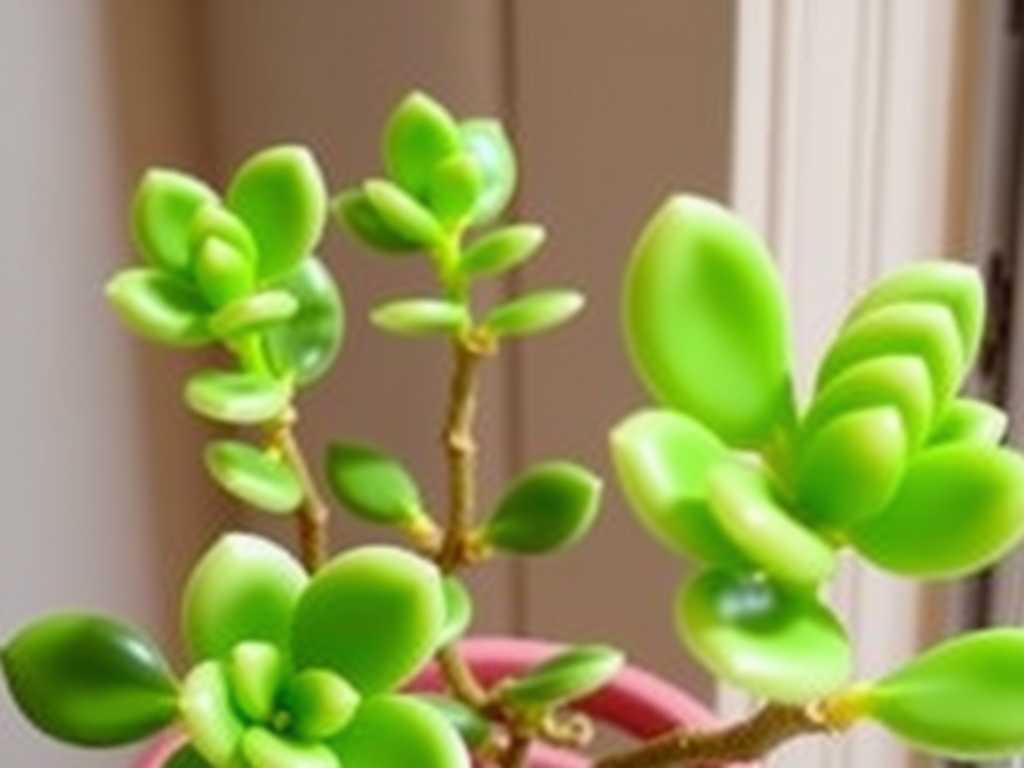
Before we dive into the fixes, let’s assess the damage. How severe is the lean? Is the stem merely tilted, or is it permanently woody and bent? A gentle lean is easier to correct than a heavy, mature plant with a curved trunk. For my experiment, I chose a medium-sized jade with about a 45-degree lean. The goal wasn’t just to straighten it, but to encourage full, even growth for the long term.
The Strategic Rotation Method: Consistency is Key
The most common advice is to rotate your plant, but doing it wrong is useless. I used to give my pots a casual quarter-turn every few months with little result. The hack is in the schedule and precision.
My process was methodical. I placed a small, removable sticker on the pot’s “shady side.” Every Monday and Thursday morning, I rotated the pot exactly 180 degrees. This ensured each side received equal light over time. I maintained this for the full two weeks and beyond.
The initial observation was subtle. After one week, the newer, smaller leaves on the shaded side began to orient themselves more upright. The drastic reaching seemed to pause. By the end of the second week, the overall silhouette looked more balanced. The key takeaway? Regular plant rotation for even light exposure must be strict. Inconsistent turning allows the plant to continue favoring one direction.
Supplemental Lighting: My Game-Changer for Dark Corners
Rotation helps, but what if the room itself is dim? My jade was in a north-facing room, even after rotation, growth was slow. I introduced a simple, full-spectrum LED grow light.
I positioned the light directly above the plant, about 12 inches from the top. This provided an overhead, sun-like source that eliminated the directional pull from the window. I set it on a 12-hour timer to mimic a natural day cycle.
The change was dramatic. Within days, the topmost buds became more active. After two weeks, I noticed a burst of new, compact growth from the center and the previously shaded side. The American Horticultural Society (AHS) notes that supplemental lighting can correct growth patterns and prevent etiolation (stretching). This hack didn’t just fix the lean; it supercharged my jade’s overall health and density.
The Gentle Staking and Training Technique
For a plant with a heavy, leaning stem, physical support is needed alongside light correction. I used a soft, green velcro plant tie and a sturdy bamboo stake.
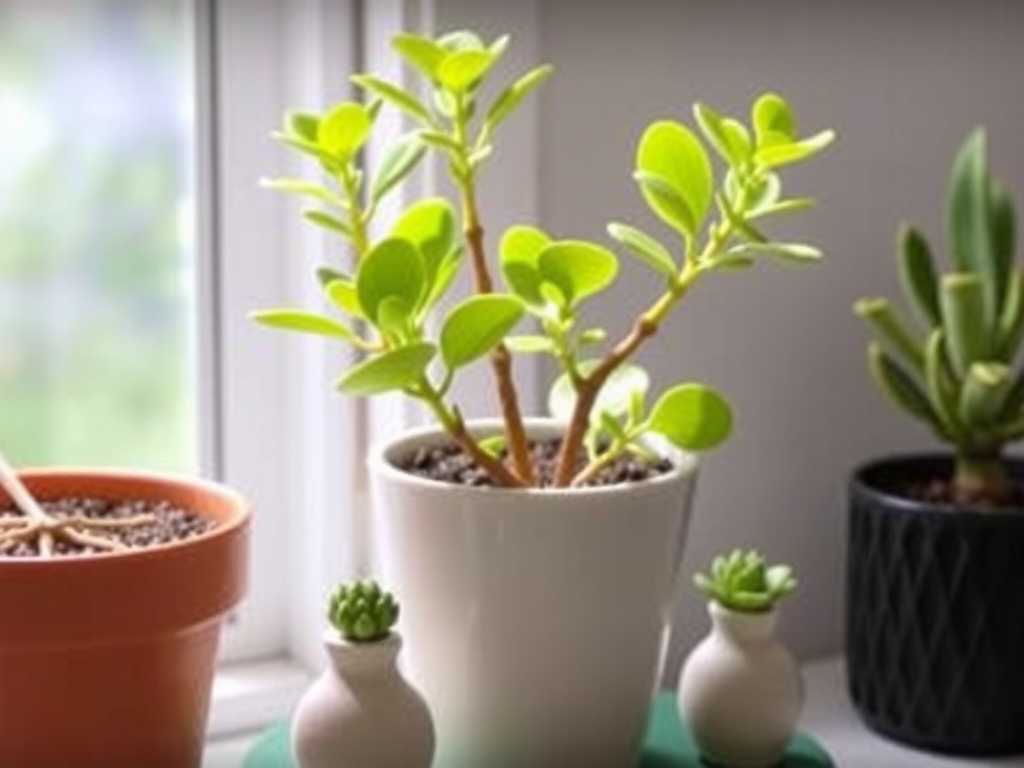
I inserted the stake into the soil on the side opposite the lean. Gently, I coaxed the main stem toward the stake, using the tie to secure it loosely—never tight enough to bite into the flesh. The aim was guidance, not force.
This was where I made a mistake. I initially tied it too tightly, and after a few days, I saw a slight constriction mark on the stem. I immediately loosened the tie. The correct method is to allow for slight movement and growth. Over the two weeks, the stake provided crucial support as the plant adjusted to its new, straighter posture under the improved light regime.
Strategic Pruning to Encourage Bushier Growth
Sometimes, you need to redirect energy. Pruning a lopsided jade plant encourages branching on the bare side. Using clean, sharp pruning shears, I made selective cuts.
I targeted the longest, most unbalanced stems, cutting them back by about one-third, just above a leaf node (the point where leaves emerge). I focused more on the overgrown, "reachy" side to stimulate growth on the sparse side.
The plant looked a bit bare for the first week, which is normal. By the end of the second week, tiny pinkish buds appeared at the leaf nodes below the cuts, especially on the previously shaded areas. This proved that pruning redirects the plant’s growth hormones (auxins) to promote branching and create a symmetrical jade plant shape.
When to Consider the Last Resort: Repotting and Repositioning
If your plant is not just leaning but also root-bound or planted in a top-heavy, unstable pot, repotting is necessary. My jade was stable, but I tested this on another. Choose a pot only 1-2 inches wider with excellent drainage.
During repotting, you have a unique chance to reposition the plant vertically in the new soil. Center it carefully. This fresh start, combined with the light hacks above, gives you maximum control.
Post-repotting, I waited a week before resuming rotation to avoid stress. The result was a stable, centered plant ready to grow evenly from its new foundation.
My Two-Week Observation Log: What Actually Happened
Here’s my real-world timeline:
- Days 1-3: Implemented strict 180-degree rotation twice weekly and set up overhead grow light. Staked the main stem loosely.
- Days 4-7: Noticed a halt in further leaning. New leaf orientation improved. Caught and fixed the too-tight staking issue.
- Days 8-10: Performed strategic pruning on longest stems. Growth appeared paused as plant focused energy on healing.
- Days 11-14: Observed new bud formation at pruned nodes and along the stem on the sparse side. Overall plant posture looked visibly more upright and balanced. The desperate "reach" was gone.
The transformation wasn’t about it becoming perfectly straight in 14 days—that’s impossible for a woody stem. The success was in stopping the worsening lean and initiating corrective new growth. The plant was now on a clear path to symmetry.
How often should I rotate my jade plant? For consistent light exposure, a quarter-turn once a week is a good minimum. For actively correcting a lean, a 180-degree turn twice a week, as I did, is more effective. Consistency matters more than the exact frequency.
Can I just bend the stem back straight? Never force a thick, woody stem. You will snap it. For mature bends, use the staking method for gentle guidance over months, combined with overhead light to encourage upward growth. The goal is to train new growth correctly.
Will the bent part of the stem ever straighten? A mature, curved stem will not truly straighten. The correction focuses on supporting that stem and ensuring all new growth grows straight and even. Over time, the new, bushier growth will visually compensate for and obscure the old bend.
Fixing a lopsided jade plant is a test of patience, not a weekend project. It requires diagnosing the root cause—almost always light—and applying a consistent, multi-pronged solution. My two-week experiment showed that combining strict rotation, supplemental overhead lighting, and gentle training can halt asymmetry in its tracks and spark balanced new growth. Remember, your plant spent months growing that way; it will need months to correct. Start with light, be patient with the process, and your jade will reward you with the sturdy, symmetrical beauty it was always meant to have.





