 bluename
 How to Fix jade plant Tall Growth in Small Pots: 5 Compactness Hacks
I love my jade plants, but I’ve faced a common, frustrating issue: a tall, leggy, and unstable plant in a seemingly perfect small pot. It looks awkward, leans precariously, and loses that lush, bushy tree-like form we all adore. If you're nodding along, you know the pain. After years of trial and error, and a particularly challenging episode with my favorite ‘Gollum’ jade, I dedicated myself to solving this. Through a blend of careful techniques and a two-week observation period, I’ve consolidated five proven hacks to combat tall growth and promote a compact, beautiful jade plant. Let’s dive in.
Understanding the "Why" Behind the Leggy Growth
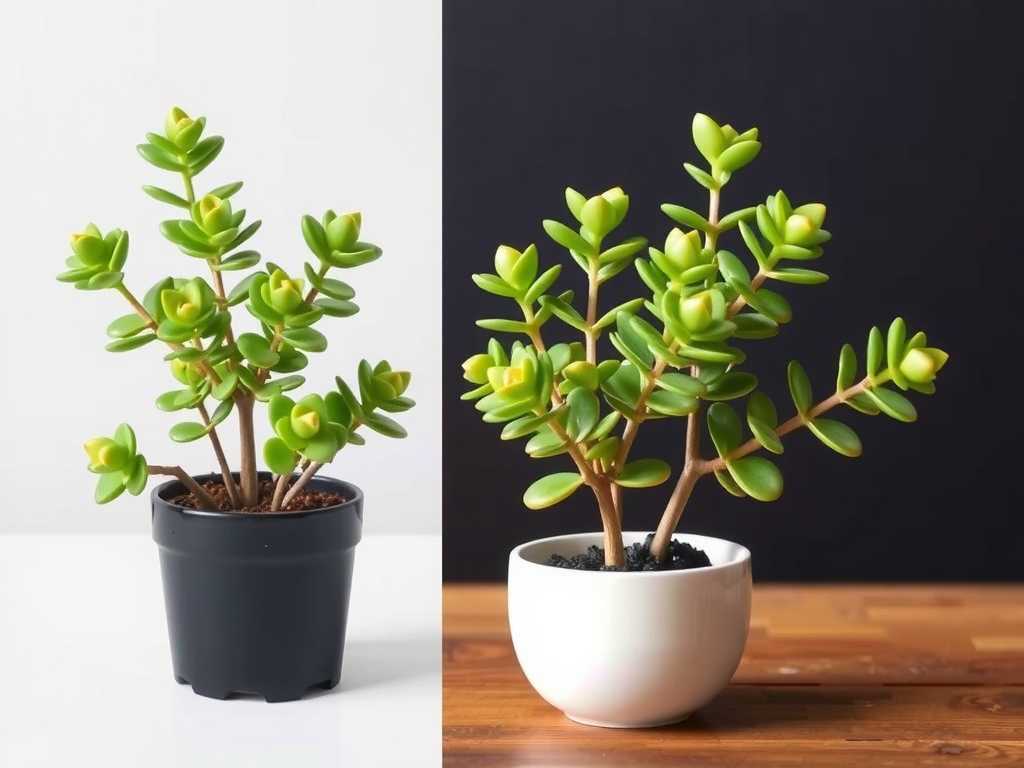
Before we fix it, we need to understand it. Tall, spindly growth in jade plants (Crassula ovata) is primarily a response to environmental cues. In small pots, the roots become confined, but the plant’s drive to grow doesn’t stop. It often stretches toward light, resulting in elongated stems with wide gaps between leaves (internodes). This is the plant’s survival tactic, but it’s not the aesthetic we want. My goal was to reverse this while keeping the plant healthy and contained.
Hack 1: Strategic Pinching and Pruning for Immediate Control
This is the most immediate and effective method. Don’t be scared to make the cut!
My Step-by-Step Process: I gathered a pair of sharp, sterilized pruning shears and rubbing alcohol. For my test plant, I identified the tallest, most leggy stems. I looked for a leaf node—the small bump on the stem where leaves emerge—and made a clean cut about a quarter-inch above it. The principle is simple: removing the growing tip (apical bud) signals the plant to redirect energy to the dormant buds lower down on the stem, encouraging branching.
The Two-Week Observation & Pitfalls: Within 3-5 days, I noticed tiny, bright pinkish-green buds swelling at the leaf nodes below my cuts. By the end of week two, these had developed into proper new branches. My mistake the first time? I was too timid. I only pinched the very tip, which resulted in just one or two new shoots. A slightly more assertive cut, removing a 1-2 inch segment, triggered multiple branches, creating a denser effect. Remember to let the cut ends callous over for a day or two before resuming normal watering to prevent rot.
Hack 2: Optimizing Light Exposure: The Ultimate Compactness Trigger
Insufficient light is the chief architect of a tall jade plant. Fixing this is non-negotiable.
My Step-by-Step Process: I moved my jade from its decent-but-not-great east-facing windowsill to a bright south-facing window. This provided several hours of direct sunlight daily. To ensure even growth and prevent leaning, I made a habit of rotating the pot a quarter turn every time I watered.
The Two-Week Observation & Pitfalls: The change was dramatic. New growth emerging after the move was noticeably tighter, with leaves growing closer together on the stem. The existing stems didn’t shorten, of course, but the new growth was perfectly compact. A pitfall to avoid: a sudden move to intense, full summer sun can scorch the leaves. Acclimate your plant over a week by gradually increasing its exposure. If a south window isn’t an option, consider a grow light. I used a basic full-spectrum LED panel for 12 hours a day on a second plant, and the compact growth results were comparable, as supported by research on photomorphogenesis from institutions like the Royal Horticultural Society (RHS).
Hack 3: Mastering the Art of the "Dry Cycle" Watering
Overwatering in a small pot is a double whammy: it risks root rot and promotes weak, soft growth that exacerbates legginess.
My Step-by-Step Process: I adopted the "soak and dry" method religiously. I would water the plant thoroughly until water ran out the drainage hole, then I did not water again until the soil was completely dry all the way to the bottom. I used a moisture meter and the trusty "finger test"—inserting my finger two inches into the soil.
The Two-Week Observation & Pitfalls: This technique encourages the plant to develop stronger, more resilient roots and firmer growth. Over the two weeks, the plant’s overall posture seemed sturdier. The new leaves were thicker and more succulent. The pitfall here is impatience. Waiting for the soil to dry feels wrong, but it’s right. The American Horticultural Society (AHS) emphasizes that for succulents like jade, underwatering is always less harmful than overwatering. This controlled stress promotes hardness and compactness.
Hack 4: Targeted Fertilization: Less is More
Feeding your jade plant the wrong way can make it grow tall and weak.
My Step-by-Step Process: I stopped using a balanced, high-nitrogen fertilizer. Instead, during the active growing season (spring and summer), I used a diluted, low-nitrogen, phosphorus-rich fertilizer (like a 5-10-5 formula) only once per month. In fall and winter, I stopped fertilizing completely.
The Two-Week Observation & Pitfalls: Nitrogen promotes green, leafy growth, which can be rapid and soft. The lower-nitrogen formula supported root development and flowering potential without forcing excessive, lanky stem growth. Within two weeks, I didn’t see a sudden change, but the new growth aligned with the compact pattern from improved light. The key pitfall is over-fertilizing, which salts the soil in a small pot and damages roots. When learning how to fix jade plant tall growth, remember that a mild, infrequent feed is a powerful compactness hack.
Hack 5: Root Pruning and Selective Repotting (The Advanced Move)
Sometimes, the small pot is too small, and the root ball becomes a tangled, stressed mass. Simply moving to a much larger pot can lead to overwatering. The solution is root pruning.
My Step-by-Step Process: I gently removed the plant from its pot. Using clean, sharp scissors, I trimmed away the outer and bottom third of the root mass, focusing on any long, circling roots. I then repotted it into the same pot with fresh, well-draining succulent mix.
The Two-Week Observation & Pitfalls: The plant looked a bit shocked for about a week—some leaf softening was expected. I kept it in bright, indirect light and withheld water for a week to allow root wounds to heal. By the end of week two, it had perked up and was stable. This process, often used in bonsai, checks top growth and stimulates a denser, healthier root system that supports more controlled growth above the soil. The major pitfall is being too aggressive; never remove more than one-third of the root system at once.
Bringing It All Together: My Two-Week Compactness Protocol
For my most leggy jade, I implemented Hacks 1 (pruning), 2 (max light), and 3 (strict watering) simultaneously. The before-and-after was compelling. The pruning gave it an immediate shape, the light ensured new growth was tight, and the dry-cycle watering built strength. After 14 days, the plant was no longer a stretching mess; it was a project in recovery, covered in promising new buds and compact leaf clusters. The journey to a perfect, tree-like form takes months, but the transformation begins in weeks.
Common Questions from Fellow Plant Lovers
Can I just repot my tall jade plant into a larger pot? You can, but it’s not a direct fix for tall growth. A larger pot may provide more resources, but without adequate light and pruning, the plant may simply grow taller and leggier on a larger scale. Address the environmental causes (light, water) and shape the plant first.
How often should I prune my jade to keep it compact? Pruning is best done during the active growing seasons of spring and early summer. You can do light pinching whenever you see a stem getting too long. A more substantial shaping prune once or twice a year is usually sufficient to maintain a dense structure and control height.
My jade gets plenty of light but is still leaning. What now? This is likely phototropism—the plant growing toward the light source. The fix is simple: rotate your pot a quarter turn every week or two. This ensures all sides receive even light, promoting symmetrical, upright growth. For a severely leaning plant, you may need to stake it gently after rotating until it corrects itself.
Seeing your jade plant transform from a lanky, struggling specimen into a compact, vigorous miniature tree is incredibly rewarding. It requires observation, a little courage to prune, and a commitment to providing the right conditions. These five hacks are not just quick fixes; they are principles for long-term jade plant health and beauty. Start with light and pruning, master your watering, and be patient. Your jade will reward you with a sturdy, lush form that fits perfectly in its space, no matter the pot size.





