 bluename
 How to Treat jade plant Sunburn: 4 Brown-Spot Causes + Recovery Fixes
I remember the day I noticed the first brown spot on my jade plant’s leaf. It was small, almost like a freckle, but I knew something was wrong. My beloved Crassula ovata, which had thrived for three years on my windowsill, suddenly looked distressed. The leaves were soft, discolored, and some had turned a sickly yellow-brown. After hours of research and two weeks of careful observation, I discovered the truth: my jade plant had sunburn. In this guide, I will walk you through exactly how to treat jade plant sunburn, explain the four most common causes of brown spots, and share the recovery fixes that worked for me.
Jade plant sunburn is a common issue for indoor gardeners, especially when these succulents are moved from low-light areas to direct sunlight too quickly. According to the Royal Horticultural Society (RHS), succulents like jade plants have adapted to bright, indirect light, not harsh midday rays. When exposed to intense sunlight, the leaf tissues can literally cook, leading to those ugly brown patches. I learned this the hard way.
Understanding Jade Plant Sunburn and Brown-Spot Causes
Cause 1: Sudden Light Exposure
The first brown-spot cause I encountered was sudden light exposure. I had moved my jade plant from a shaded corner to a south-facing window without any acclimation. Within 24 hours, the leaves closest to the glass developed reddish-brown spots. This is classic sunburn. The RHS explains that succulent leaves lack the protective pigments needed to handle abrupt UV increases.
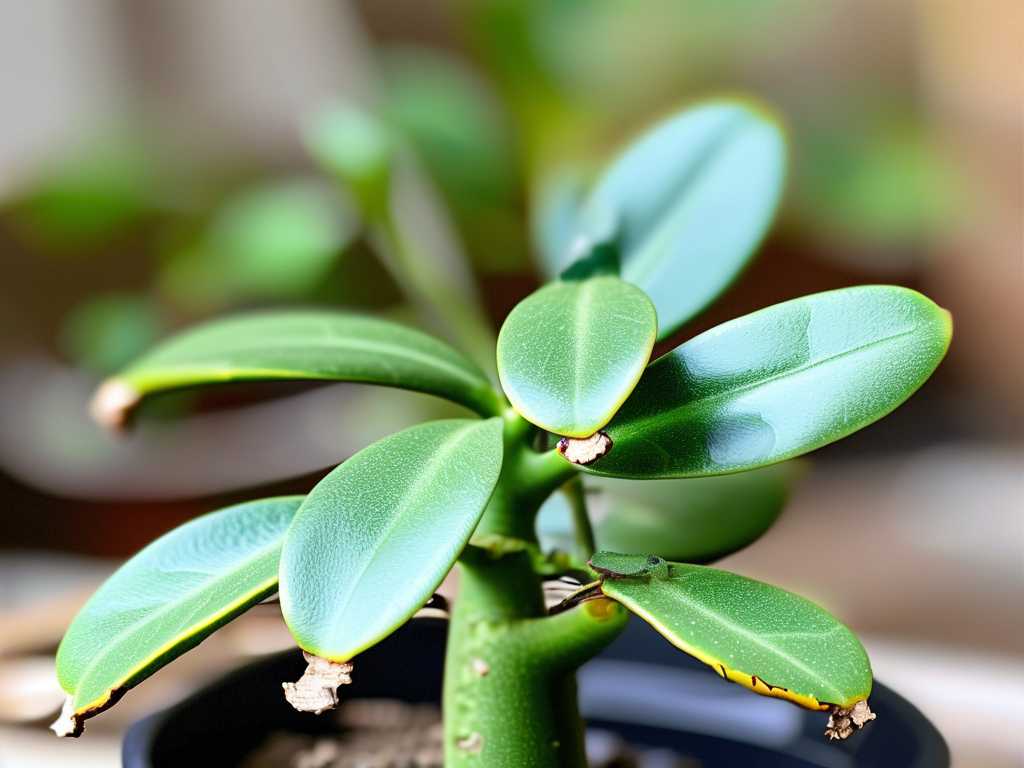
My mistake taught me that jade plants need gradual adaptation. If you are wondering how to treat jade plant sunburn that results from this cause, the key is to act quickly: move the plant back to indirect light and trim severely damaged leaves. I did this on day one of my two-week recovery plan.
Cause 2: Overwatering Combined with Heat
The second cause surprised me. I thought brown spots always meant sunburn, but my friend who manages a local greenhouse pointed out that overwatering can cause similar symptoms. When the soil stays wet and temperatures rise, roots can rot. The rot then manifests as brown, mushy spots on leaves. The American Horticultural Society (AHSA) notes that stressed roots compromise a plant’s ability to regulate water and nutrients, making leaves more susceptible to sun damage.
During my second week of observation, I noticed that some brown spots had a water-soaked appearance. That was root rot, not sunburn. To treat this, I had to repot the plant with fresh, dry soil and cut away any blackened roots. This dual issue—sunburn plus overwatering—is surprisingly common among jade plant owners.
Cause 3: Edema and Water Stress
Edema is a lesser-known cause of brown spots that I discovered through trial and error. This condition occurs when the plant absorbs water faster than it can transpire. The excess water causes cells to burst, leaving corky, brown lesions on the underside of leaves. The AHSA confirms that edema often appears in jade plants during periods of high humidity or inconsistent watering.
I noticed these spots after a week of heavy rain (my plant was on a covered porch). They looked different from sunburn marks: raised, rough, and confined to lower leaves. Learning how to treat jade plant sunburn effectively means distinguishing edema from true UV damage. For edema, I simply adjusted my watering schedule and improved air circulation—the spots faded within my two-week recovery window.
Cause 4: Pest Infestation Mimicking Sunburn
The fourth cause threw me off completely. Tiny brown spots that looked like sunburn were actually signs of scale insects. These pests attach to leaves and stems, feeding on sap and leaving brown, waxy deposits. The RHS warns that jade plants are particularly susceptible to mealybugs and scale, especially when stressed by heat or overwatering.
When I inspected my plant closely on day four, I found the culprits. The brown spots had a sticky residue (honeydew) around them, which is a telltale sign. My approach to treating this false sunburn involved isolating the plant, wiping leaves with rubbing alcohol, and applying neem oil spray. This distinction matters because sunburn treatments won’t eliminate pests.
My 14-Day Recovery Plan for Jade Plant Sunburn
Days 1-3: Immediate First Aid
On day one, I moved my jade plant to a spot with bright, indirect light (an east-facing window with sheer curtains). I removed the most damaged leaves—those that were fully brown or crispy. I used clean, sharp scissors to cut them at the base. This was difficult because jade plants store water in their leaves, and I hated losing them. But the RHS advises that dead tissue can attract fungi and pests.
I also checked the soil moisture. It was damp from my previous overwatering, so I let it dry out completely. For the first three days, I did not water at all. Instead, I focused on stabilizing the environment: consistent temperature around 70°F (21°C) and good air flow from a nearby fan.
One mistake I made on day two: I misted the leaves to cool them down. This was counterproductive. The AHSA explains that water droplets on sunburned leaves can act like magnifying glasses, intensifying UV rays and causing more damage. I immediately stopped.
Days 4-6: Adjusting Light and Watering
By day four, I noticed that some of the remaining green leaves had a reddish tinge. This is actually a normal stress response in jade plants—they produce anthocyanin pigments to protect themselves from further UV exposure. However, this can be confused with early sunburn. To learn how to treat jade plant sunburn properly, I needed to distinguish between protective reddening and actual cellular damage.
I gradually reintroduced watering on day five, but only when the soil was completely dry. I used a moisture meter to check the bottom of the pot. This prevented the overwatering issue I had earlier. I also rotated the plant every morning so all sides received equal light.
A key insight from my greenhouse friend: jade plants can recover from mild sunburn if the growing tip (the apex) remains green. Mine was still healthy, so I knew there was hope.
Days 7-10: Observing and Pruning
During the second week, I saw real progress. New baby leaves began forming at the nodes where I had trimmed the burned leaves. This was encouraging. I continued to remove any leaves that turned completely brown or mushy. On day eight, I used a diluted fertilizer (half-strength balanced liquid fertilizer) to give the plant a nutrient boost.
I also discovered that some brown spots were natural corking—a sign of aging, not damage. Mature jade plants develop woody stems and spots on older leaves. The AHSA categorizes this as “senescence,” which is normal and not a health concern.
A mistake I made on day nine: I moved the plant back to a brighter window for one afternoon. Within four hours, a few leaves developed new red-brown spots. This taught me that recovery requires patience. Sunburn treatment is not a one-day fix.
Days 11-14: Full Recovery and Prevention
By day 14, my jade plant had produced at least three new sets of leaves. The original sunburn scars remained on the older leaves, but they were no longer spreading. I accepted that those leaves would always have cosmetic damage. The key was that the plant’s overall health had returned.
I now keep my jade plant in a location where it receives morning sun (2-3 hours) and bright indirect light for the rest of the day. This mimics its native South African habitat, as recommended by the RHS. I also installed a light meter app on my phone to ensure the light intensity stays between 10,000-20,000 lux—the sweet spot for jade plants.
For prevention, I implemented a slow acclimation schedule: whenever I move the plant to a brighter area, I increase exposure by just 30 minutes per day over a week. This has completely eliminated further brown spots.
Expert Tips for Long-Term Jade Plant Health
The RHS emphasizes that jade plants are low-maintenance but unforgiving of sudden changes. Their leaves store water, which makes them resilient to drought but vulnerable to sunburn when conditions shift rapidly. My experience aligns with this: the brown spots on my jade plant appeared only after I disrupted its stable environment.
The AHSA adds that proper drainage is critical. I repotted my jade plant in a terracotta pot with a cacti-succulent mix. This allows excess water to evaporate quickly, reducing the risk of root rot that mimics sunburn symptoms. I also learned to water deeply but infrequently—about once every two to three weeks in winter, and weekly in summer.
If you’re dealing with jade plant sunburn, remember that recovery is slow. Do not expect overnight results. My plant took the full two weeks to show visible improvement, and it was another month before it looked truly lush again. Patience and consistent care are non-negotiable.
Common Questions About Jade Plant Sunburn
1. Can a jade plant recover from severe sunburn where all leaves are brown?
In my experience, if every single leaf is brown and crispy, recovery is unlikely. The plant needs some green tissue to photosynthesize. However, if the stem is still firm and green, you can cut back all the damaged leaves and hope for new growth. I had a friend who saved a jade plant this way—it took three months, but new shoots emerged from the stem nodes. The RHS advises that succulents can regenerate from healthy tissue, but full leaf loss is a serious emergency.
2. Should I remove leaves with brown spots from sunburn?
Yes, but only if they are completely dead or mushy. Partially green leaves can still photosynthesize and provide energy for recovery. I removed only the leaves that were more than 70% brown or felt soft to the touch. The AHSA warns that removing too many leaves at once can shock the plant further. Use clean scissors and cut at the base of the leaf stem.
3. How long does it take for jade plant sunburn marks to fade naturally?
Sunburn scars on mature leaves will never fully disappear—they remain as permanent brown or tan patches. However, as the plant grows, these damaged leaves will eventually drop off or be replaced by new ones. In my recovery, the oldest burned leaves remained for about four months before naturally shedding. New leaves grew in without any spots. The timeline depends on the severity of the damage and the plant’s growth rate.
Final Thoughts on Treating Jade Plant Sunburn
Knowing how to treat jade plant sunburn is a skill every succulent owner should develop. My journey from panicked plant parent to confident caretaker taught me that prevention is better than cure. The four brown-spot causes I encountered—sudden light exposure, overwatering with heat, edema, and pests—all required different responses. By understanding the root cause, I could apply the right fixes.
My two-week recovery plan worked because I acted quickly, kept a close observation journal, and didn’t make drastic changes all at once. If you see brown spots on your jade plant, take a deep breath. Look at the pattern, check the soil, inspect for pests, and remember that most sunburn is reversible. With careful adjustments to light and water, your jade plant can return to its beautiful, glossy self.





