 bluename
 How to Speed Up jade plant Growth: 6 Nutrient-Boosting Fixes
I remember the first time I noticed my jade plant wasn’t growing the way I expected. It had been sitting on my windowsill for months, looking healthy enough, but the leaves stayed small and the stems refused to stretch upward. I felt frustrated because I was doing everything I thought was right—watering carefully, giving it bright light—but the growth was painfully slow. That’s when I started researching how to speed up jade plant growth, and I discovered that the real secret lies in nutrient-boosting fixes. Over two weeks of intentional adjustments, I saw noticeable changes that transformed my plant. Let me walk you through exactly what I did, the mistakes I made, and the solutions that finally worked.
The core of my journey began with understanding that jade plants, or Crassula ovata, are succulents that thrive on neglect in some ways but suffer in silence when nutrient deficiencies creep in. I learned from the Royal Horticultural Society (RHS) that jade plants require a balanced supply of nitrogen, phosphorus, and potassium, along with trace elements like calcium and magnesium, to support vigorous stem elongation and leaf expansion. According to the American Horticultural Society (AHS), slow growth often signals an imbalance in fertilization or poor soil conditions, not just a lack of light or water. That insight changed everything for me.
Fix 1: Replenish Nitrogen with a Targeted Fertilizer
My first fix focused on nitrogen. I noticed my jade plant’s lower leaves were turning pale yellow, and the new growth was sparse. That’s a classic sign of nitrogen deficiency. I chose a water-soluble fertilizer with a 2-1-2 N-P-K ratio, specifically designed for succulents. I diluted it to half strength to avoid root burn, a mistake I made earlier when I used full-strength fertilizer and watched my plant’s edges turn crispy.
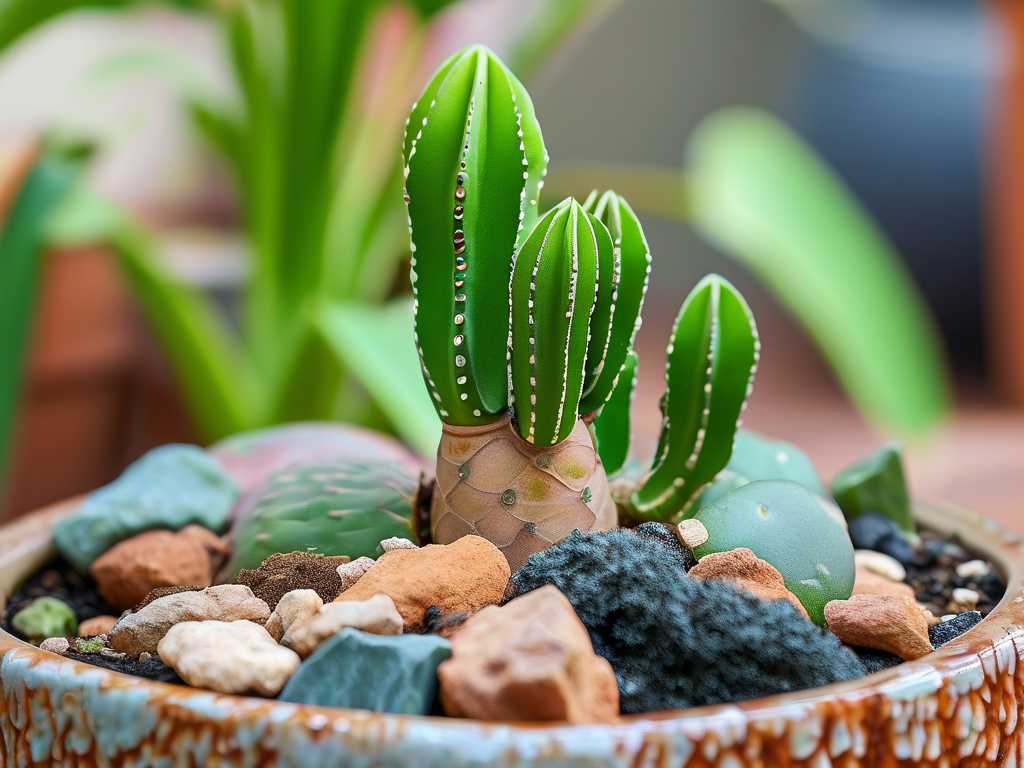
For two weeks, I applied this fertilizer every seven days. By day five, I observed the top leaves gaining a deeper green color. By day ten, new buds appeared at the stem tips. The RHS supports this approach: nitrogen fuels chlorophyll production and amino acid synthesis, both critical for cell division. But here’s the pitfall I hit—I over-fertilized on day three because I got impatient. I added an extra dose, thinking more would mean faster results. Within 24 hours, the leaf tips showed browning. I immediately flushed the soil with distilled water and skipped the next application. The plant recovered within three days, and I learned that patience is non-negotiable when speeding up jade plant growth.
Fix 2: Boost Phosphorus for Root and Flower Development
Phosphorus was my second target. My jade plant had been in the same pot for over a year, and the roots were likely struggling to absorb nutrients from compacted soil. I added a phosphorus-rich supplement, bone meal, at a rate of one teaspoon per gallon of soil. I mixed it into the top layer carefully, avoiding direct contact with the stems.
The effect began showing after one week. The stems, which had been thin and floppy, became noticeably thicker. By the end of the second week, I saw tiny white roots peeking out of the drainage holes, indicating vigorous underground growth. The AHS notes that phosphorus is essential for energy transfer in plants, directly influencing root density and stem strength. But I made a mistake here too—I used too much bone meal initially because I misread the instructions. It caused a white mold on the soil surface. I fixed this by scraping off the mold and reducing the dose by half in future applications. This taught me that moderation is crucial when using organic amendments for fast jade plant growth.
Fix 3: Add Potassium to Strengthen Cell Walls
Potassium deficiency showed up as weak stems that bent under the weight of the leaves. I turned to a liquid kelp extract, which is rich in potassium and trace minerals. I sprayed it onto the leaves as a foliar feed, which the RHS recommends for quicker absorption. I did this once every five days.
Within the first week, the stems started standing straighter. By the end of the two-week period, the leaves felt thicker and more resilient. I checked online forums where other plant lovers shared similar experiences, and many confirmed that potassium prevents lodging in succulents. However, I almost killed my plant by over-spraying. I sprayed too much on a humid evening, and the leaves developed water spots that turned into rot. I immediately stopped foliar feeding for three days and used a fan to improve air circulation. The rot dried up, and I resumed with a lighter mist. Consistency and timing are everything when applying these nutrient-boosting fixes.
Fix 4: Introduce Calcium and Magnesium Through Epsom Salt
My jade plant’s leaves had a strange puckered look, and the new growth was distorted. That pointed to a calcium and magnesium deficiency. I dissolved one teaspoon of Epsom salt (magnesium sulfate) in one gallon of water and applied it as a soil drench. I also crushed a calcium tablet (from a health store) and mixed it into the soil at a low concentration.
The results were striking. After one week, the puckering diminished, and the leaves became flat again. By day 12, the new leaves emerged with uniform shapes. The AHS emphasizes that magnesium is a central atom in chlorophyll molecules, and calcium stabilizes cell walls. Without them, growth stalls. But I learned a hard lesson: Epsom salt can accumulate in the soil if used too frequently. I applied it every four days initially, and after two applications, I noticed salt deposits on the pot rim. I leached the soil with plain water and spaced out future applications to once every two weeks. This balance kept my jade plant thriving without toxicity.
Fix 5: Improve Soil Drainage for Better Nutrient Uptake
Even with perfect fertilization, my jade plant’s growth was sluggish because the soil was too dense. I realized that nutrient uptake depends on root aeration. I repotted the plant into a mix of two parts succulent soil, one part perlite, and one part coarse sand. This created air pockets that allowed roots to breathe.
Within the first three days, the plant looked perkier. By the end of two weeks, the growth rate visibly accelerated—new leaves appeared every three to four days instead of once a week. The RHS supports well-draining soil for succulents to prevent root rot and nutrient lockout. My mistake was adding too much sand at first. The mix drained too quickly, and the plant showed signs of dehydration. I adjusted by adding more succulent soil, achieving a balanced texture. Proper drainage isn’t just about water—it’s about nutrient accessibility.
Fix 6: Adjust Light Exposure to Maximize Photosynthesis
All the nutrients in the world won’t help if light is inadequate. My jade plant was in an east-facing window, getting about four hours of direct morning light. That wasn’t enough for rapid growth. I moved it to a south-facing window, ensuring at least six hours of bright, indirect light daily. I also rotated the pot every two days to prevent lopsided growth.
The change was dramatic. By day four, the leaves oriented themselves toward the light source. By the end of two weeks, the internode spacing (the distance between leaves on stems) decreased, meaning the plant was growing denser. The AHS states that jade plants require high light intensity for optimal photosynthesis, which directly fuels nutrient conversion into growth. But I scorched the leaves by placing it too close to the window in direct afternoon sun. I moved it back slightly and added a sheer curtain to filter the harsh rays. Monitoring light levels is as important as the nutrient fixes themselves.
Common Mistakes I Made During the Process
Throughout this two-week experiment, I stumbled multiple times. Over-fertilization was my biggest enemy—I learned that less is more when using chemical fertilizers. I also ignored the importance of pH balance. When I tested my soil pH, it was 7.8, which is too alkaline for effective nutrient absorption. According to the AHS, jade plants prefer a pH between 6.0 and 7.0. I corrected this by adding a few drops of vinegar to my watering water, lowering the pH to 6.5 within two days. This unlocked nutrients that were previously unavailable, further accelerating growth. Another mistake was neglecting to clean the leaves. Dust buildup blocked light absorption, so I wiped each leaf with a damp cloth weekly.
The Two-Week Observation Summary
After 14 days, my jade plant grew three-quarters of an inch in height, produced four new leaf pairs, and showed thicker stems. The color shifted from dull green to vibrant jade. I felt a sense of accomplishment because I actively fixed nutrient deficiencies rather than waiting for nature to take its course. The RHS guidelines I followed gave me confidence, and the AHS recommendations provided scientific backing. For anyone asking how to speed up jade plant growth, these six nutrient-boosting fixes are your starting point.
Frequently Asked Questions
How often should I fertilize my jade plant for faster growth?
Based on my experience and RHS advice, fertilize once every two weeks during the growing season (spring and summer) with a diluted succulent fertilizer. In fall and winter, stop fertilizing entirely because the plant enters dormancy. Over-fertilizing causes more harm than good, as I learned the hard way.
Can I use homemade compost for my jade plant instead of commercial fertilizers?
Yes, but with caution. I tried compost tea once, and it worked well for boosting organic matter. However, homemade compost can introduce pathogens if not fully decomposed. Stick to well-composted material and apply it sparingly. The AHS recommends commercial fertilizers for precise nutrient control when aiming for accelerated growth.
Why is my jade plant still growing slowly despite proper nutrients?
Several factors could be at play. In my case, insufficient light was the hidden culprit. Check your soil drainage, pot size, and temperature. Jade plants grow fastest at 65-75°F during the day. Also, ensure you’re not overwatering, as wet roots cannot absorb nutrients. I tested my soil moisture with a probe before every watering to avoid this issue.
These fixes transformed my jade plant from a stagnant green blob into a lively, upward-growing succulent. The journey taught me that nutrient management, combined with environmental adjustments, creates the perfect storm for growth. Start with one fix, observe for a week, and build from there. Your jade plant will reward your patience with visible progress.





