bluename
 How to Fix jade plant Leggy Growth in Summer: 5 Bushiness Hacks
There’s a special kind of plant parent frustration that hits in mid-summer. You’ve placed your jade plant in what you thought was the perfect bright spot, watered it faithfully, and yet… it’s happening. Your once compact, tree-like succulent is now stretching out, with long, weak stems, sparse leaves, and a general look of being all legs and no body. This leggy growth feels like a personal failure, but I’m here to tell you it’s not. I’ve been there, staring at my own lanky jade, wondering where I went wrong. After years of trial, error, and a particularly transformative two-week experiment last summer, I’ve cracked the code. Fixing a leggy jade plant isn’t about one magic trick; it’s a combination of understanding the “why” and applying targeted, consistent “hacks” to encourage dense, bushy growth. Let me walk you through the exact steps that saved my plant.
Understanding Why Your Jade Plant Gets Leggy in Summer
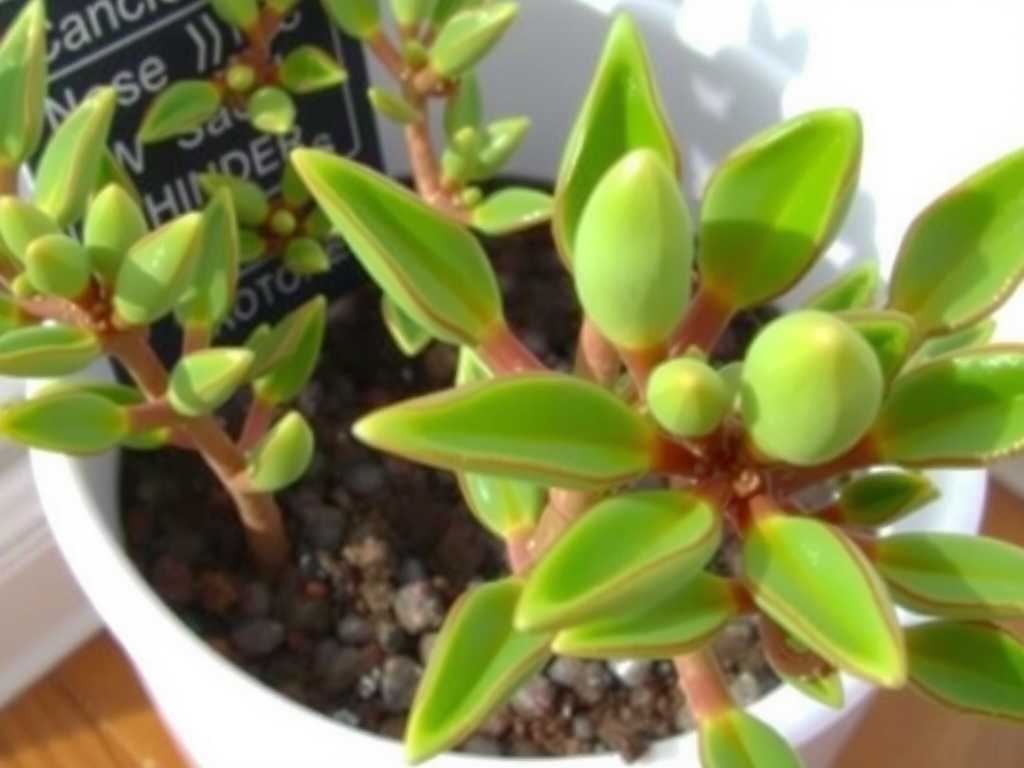
Before we dive into the fixes, it’s crucial to understand the enemy. Leggy growth, or etiolation, is a stress response. In summer, the cause is often a paradox. While there’s more light overall, it might not be the right kind of light. Your jade is reaching, literally stretching its stem cells, in search of stronger sunlight. This often happens when the plant is behind a window filter, gets only indirect light, or experiences long periods of intense heat without sufficient light intensity. The Royal Horticultural Society (RHS) notes that succulents like jade plants require several hours of direct sunlight daily to maintain compact form. Without it, growth becomes weak and elongated. My own mistake was keeping a large jade on a north-east facing patio, thinking the long daylight hours were enough. They weren’t. The light was bright but diffuse, and the plant responded by becoming leggy.
Hack #1: The Strategic Summer Light Shift
The single most effective change I made was rethinking light exposure. Jade plants need direct sun, but the scorching afternoon sun of peak summer can bleach leaves. The key is strategic placement.
My process was simple but deliberate. I moved my leggy jade to a spot that received blazing, direct morning sunlight (from sunrise until about 1 PM) but was shielded from the harsh afternoon rays by 2 PM. This provided the high-intensity light it craved for compact growth without the risk of sunburn. I observed it closely for the first 48 hours for any signs of stress.
The transformation wasn’t overnight, but within the first week, I noticed a change. The new growth tips emerging from the top weren’t stretching upwards as desperately. They were shorter, tighter, and the leaves were developing closer together on the stem. By the end of the two-week period, the difference in the new growth versus the old leggy stems was stark. It was living proof that correcting light is the foundational step. If you can’t provide natural direct sun, consider a strong grow light placed 6-8 inches above the plant for 12-14 hours a day.
Hack #2: The Pinch & Snip Method for Immediate Bushiness
While better light prevents future legginess, we must deal with the existing long stems. This is where strategic pruning, or the “pinch and snip,” comes in. The American Horticultural Society (AHS) emphasizes that pruning encourages branching in woody plants, and jades are no exception. The goal is to signal the plant to grow out, not just up.
Here’s my hands-on method. I identified the leggiest stems. Using clean, sharp pruning shears (I wipe mine with isopropyl alcohol), I made a cut about a quarter-inch above a leaf node (the little bump where leaves emerge). You want to leave a small stub. I made sure the node I cut above had a healthy pair of leaves. This node is where the magic happens—it will now activate and produce two new branches.
The “pinch” part is for softer, newer growth. Simply use your fingernails to pinch off the very top set of tiny leaves at the end of a stem. This removes the apical meristem (the dominant growth point), forcing the plant to redirect energy to lower nodes.
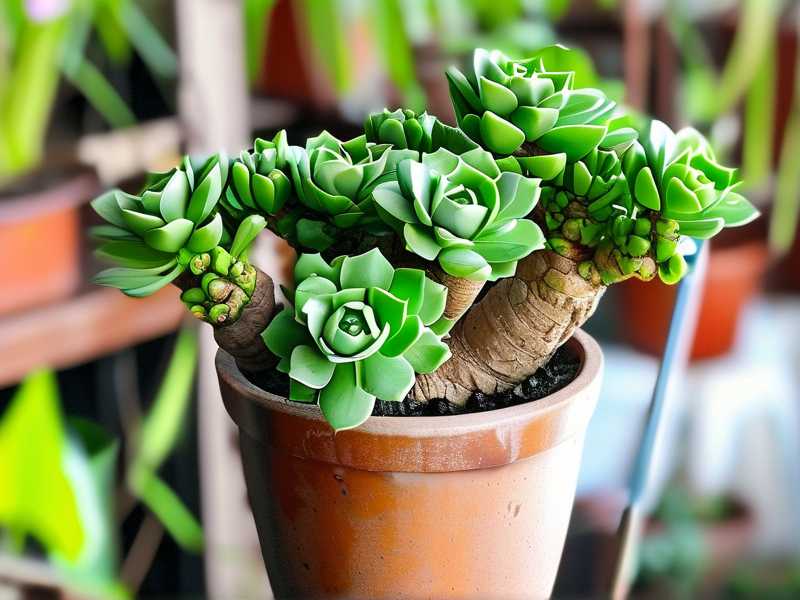
My two-week observation was fascinating. Within 3-5 days, the cut and pinched nodes began to swell slightly. By day 10, tiny, bright green buds were visibly pushing out. By the end of the second week, those buds had unfurled into proper new branches. It wasn’t a full bush yet, but the skeleton for future bushiness was clearly laid. One pitfall I avoided: over-pruning. I never removed more than 20-25% of the plant at once to avoid shock.
Hack #3: Mastering the “Soak & Dry” Watering Rhythm
Summer heat accelerates soil drying, leading many to water more frequently. This was my second big mistake. More water without correspondingly intense light actually fuels faster, weaker growth. The plant has the water to grow quickly, but not the light to grow strong. The solution is the classic “soak and dry” method, executed with precision.
I let my jade’s soil dry out completely, not just on the surface. I stuck my finger deep into the pot—about two knuckles deep. Only when it felt utterly dry did I water. And when I watered, I did it thoroughly. I took the pot to the sink and watered slowly until streams ran freely from the drainage holes, ensuring the entire root ball was saturated. Then, I let it drain completely before returning it to its sunny spot.
This cycle created a mild, beneficial stress. The plant experienced a clear wet-dry cycle. During the “dry” period, the roots worked to seek moisture, strengthening the root system. When finally watered, the plant took up moisture efficiently, supporting sturdy growth rather than bloated, weak expansion. Over two weeks, this regimen, combined with better light, made the existing leaves plumper and firmer, a sign of improved overall health and water storage.
Hack #4: The Balanced, Half-Strength Summer Feed
Fertilizer is not a plant food; it’s more like vitamins and minerals. Giving a leggy plant full-strength fertilizer in summer is like giving an espresso to someone who needs to relax—it encourages the wrong kind of growth. I switched to a balanced, water-soluble fertilizer (with an equal NPK ratio like 10-10-10) and diluted it to half the recommended strength.
I applied this weak solution only once at the beginning of my two-week experiment, right after a thorough watering. The goal was to provide just enough nutrients to support the new branching triggered by pruning, without spurring a rampant growth spurt. The results complemented the other hacks perfectly. The new buds emerging from the pruned nodes seemed to develop with more vigor and a richer green color compared to older growth, indicating they were well-supported nutritionally for robust development.
Hack #5: The Supportive Soil & Pot Check
This is a supporting hack, but vital for long-term success. I checked my jade’s root system. A pot-bound plant or one in old, compacted soil struggles to thrive, no matter what you do above the soil. I gently tipped the plant out. The roots were healthy but circling the bottom. I didn’t do a full repot (to avoid compounding stress), but I did loosen the outer root ball slightly and added a fresh layer of well-draining succulent mix to the top of the pot. This mix was crucial—a blend of regular potting soil, coarse perlite, and some orchid bark for aeration. Good drainage is non-negotiable for preventing root rot and supporting the healthy “soak and dry” cycle.
My Two-Week Transformation Journal
To give you a real picture, here was my timeline:
- Day 1-3: Performed strategic pruning (“Hack #2”), moved plant to morning sun location (“Hack #1”), gave a half-strength feed (“Hack #4”).
- Day 4-7: Maintained strict “soak and dry” watering (“Hack #3”). Observed slight swelling at pruned nodes. No signs of sunburn or shock.
- Day 8-10: Tiny green buds clearly visible at every cut and pinch point. New top growth visibly more compact.
- Day 11-14: Buds lengthened into new stems with tightly packed leaves. Overall plant posture looked more balanced, with energy visibly redirected to new lateral growth. The experiment was a clear success.
Addressing Your Curiosities
Will the old leggy stems ever shrink back? No, the elongated sections of stem will not shorten or revert. The strategy is to make them the sturdy “trunks” of your future bushy plant. The new, compact growth from the pruning points will eventually cover and overshadow the old legginess, creating a fuller silhouette. You can eventually prune those long stems back further if desired, once the plant is bushier.
Can I just propagate the leggy stems instead of pruning the main plant? Absolutely! This is a fantastic bonus. Those leggy stems you snip off can be left to callous for a few days and then planted in dry succulent mix. They will root and grow into new, compact plants if placed in adequate light. It’s a great way to multiply your jade collection while fixing the original plant’s shape.
How often should I repeat the pinching process? Once you see a new branch grow out and develop 2-3 sets of leaves, you can pinch its tip again to encourage it to branch further. This iterative process is how you build incredible density. I typically do a maintenance pinch every few months during the active growing season (spring and summer).
Seeing your jade plant transform from leggy and sparse to dense and bushy is incredibly rewarding. It requires patience and a multi-pronged approach—superior light, courageous pruning, disciplined watering, gentle feeding, and proper soil. Start with the light shift and a careful pruning session. Be consistent with your watering, and observe your plant closely over the following weeks. Those promising little buds will appear, signaling that your jade is on its way to reclaiming its robust, tree-like glory. The journey from spindly to spectacular is entirely within your reach.