bluename
 How to Stop jade plant Leaf Drop from Humidity: 5 Moisture Fixes That Actually Work
I love my jade plants. Their plump, glossy leaves and sturdy presence make them feel like miniature, resilient trees. But last summer, I faced a problem that almost every indoor gardener dreads: a sudden, alarming leaf drop. Healthy leaves were turning soft, yellowing, and then just… letting go. It wasn’t the typical overwatering sign of mushy, black stems. The soil felt fine. The culprit, after some frantic research and ruling out other issues, was something I hadn’t given enough thought to—humidity. My bathroom, where I’d placed a large jade for its good light, had become a steamy trap. This experience sent me on a mission to understand and fix humidity-related leaf drop in jade plants (Crassula ovata). Over two weeks of careful adjustments and observation, I found what works. Here are the five practical fixes that saved my plant and will save yours.
Understanding Why Your Jade Plant Hates High Humidity
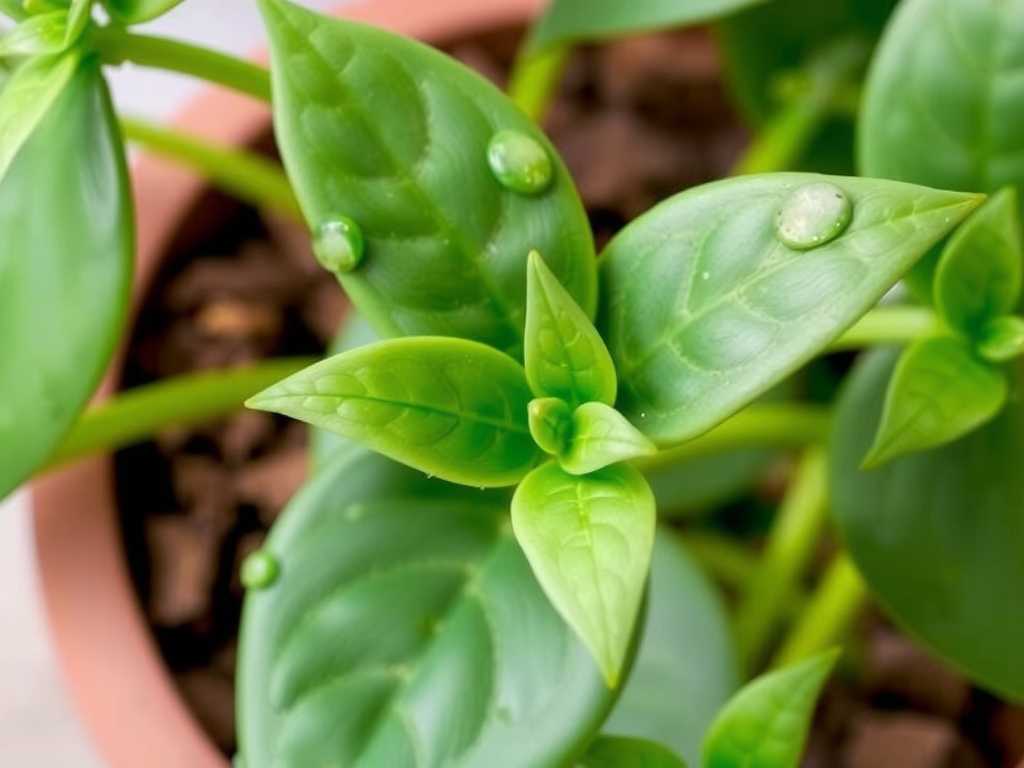
Jade plants are succulents native to arid regions of South Africa. They are built to store water in their leaves, stems, and roots. In their natural habitat, humidity is low, and the air moves freely. High humidity disrupts their core survival mechanism. When the air is constantly moist, the plant’s transpiration process—how it “breathes” out water vapor through tiny pores called stomata—slows down dramatically. With transpiration hampered, the plant cannot effectively pull more water and nutrients up from its roots. The existing moisture in the leaves has nowhere to go, causing cells to swell, weaken, and eventually rupture. This leads to those telltale soft, water-soaked spots, yellowing, and the inevitable leaf drop. It’s essentially a form of edema. As Leslie Halleck, a certified horticulturist, notes in her work on houseplant care, “Succulents like jade plants prioritize air flow and dry conditions around their foliage; high ambient moisture is an open invitation for fungal issues and cellular breakdown.”
My 2-Week Journey to Stabilize the Jade
Before starting, I moved my struggling jade from the bathroom to a well-lit living room area. I noted about 5-7 leaves were in various stages of yellowing or had recently fallen. I committed to a 14-day protocol, monitoring the plant daily and tracking any new leaf loss or improvements in leaf firmness. The environment’s relative humidity was initially at a steady 70% near the plant. My goal was to reduce that and increase air circulation without shocking the plant. The following five fixes were implemented in combination, not isolation.
Fix 1: Master the Art of Strategic Watering
This is the most critical adjustment. In high-humidity conditions, the soil takes much longer to dry out. Continuing your normal watering schedule is a death sentence.
- My Step: I completely skipped the next scheduled watering. I inserted my finger deep into the soil—all the way to the second knuckle. I only considered watering when that depth was completely dry. For my medium-sized pot, this meant extending the time between waterings from 10 days to nearly 18 days. I used a moisture meter for confirmation, ensuring it read “dry” before I even thought about giving it a drink.
- The 2-Week Observation: In the first week, leaf drop slowed but didn’t stop (2 more leaves fell). By day 10, with the soil genuinely dry, I gave it a thorough but careful watering, allowing full drainage. No new leaves yellowed in the following four days. The remaining leaves began to feel firmer to the touch.
- The Pitfall & Solution: My pitfall was assuming “the top looks dry, so it’s fine.” The solution was the “deep finger test” and tool use. A moisture meter took the guesswork out and prevented my own over-eagerness from causing harm.
Fix 2: Create a Breeze: The Power of Air Circulation
Stagnant, moist air is the enemy. You don’t need a gale-force wind; you need gentle, consistent air movement.
- My Step: I placed a small, oscillating fan on a low setting across the room from the plant, ensuring it wasn’t blowing directly on it. The goal was to move the room’s air, not desiccate the leaves. I ran it for 4-6 hours during the daytime.
- The 2-Week Observation: This had the most immediate visual effect. Within 48 hours, the soil surface dried more evenly. The plant’s posture seemed to improve, as if it was “perking up” into the fresh air. By the end of the two weeks, the ambient humidity around the plant had dropped by about 8%.
- The Pitfall & Solution: The pitfall is pointing a fan directly at the plant, which can cause stress or rapid moisture loss from a few specific leaves. The solution is indirect, gentle oscillation. Think of it as simulating a natural, breezy environment.
Fix 3: The Right Pot and Soil: Your Drainage Dream Team
A pot that traps water and soil that holds moisture are accomplices in humidity-related problems.
- My Step: I assessed my setup. I was lucky—my pot had a large drainage hole. However, my soil was a standard, peat-heavy potting mix that retained moisture for too long. I didn’t repot immediately (to avoid compounding stress), but I prepared a new, fast-draining mix for the future: 2 parts potting soil, 1 part coarse perlite, and 1 part pine bark fines.
- The 2-Week Observation: While I didn’t repot during the observation period, understanding this flaw explained why the soil stayed wet for so long. The Royal Horticultural Society (RHS) advises a “gritty, well-drained compost” for succulents to prevent waterlogging, especially in non-ideal humidity conditions. This fix is a preventative cornerstone for long-term health.
- The Pitfall & Solution: Using decorative pots without drainage holes or dense, moisture-retentive soil. The solution is always an unglazed terracotta pot (which wicks away moisture) with a drainage hole, filled with a purpose-made succulent/cactus mix or a DIY gritty blend.
Fix 4: Relocate for Success: Light and Space Matters
Where your jade lives dramatically impacts the humidity it experiences.
- My Step: I moved it from the humid bathroom to a bright, east-facing window in a larger, airier living space. I also ensured it wasn’t crowded among other plants. Grouping plants increases local humidity—a good trick for tropicals, but a bad one for jades.
- The 2-Week Observation: The new location had significantly better light and lower ambient humidity (around 55%). The improved light intensity boosted the plant’s metabolism, helping it use water more efficiently. The leaf drop ceased entirely by day 12.
- The Pitfall & Solution: Placing jades in kitchens, bathrooms, or dark corners. The solution is a sunny, ventilated spot with at least 4-6 hours of bright, indirect light. A south or west-facing window (with some protection from harsh afternoon sun) is often ideal.
Fix 5: When to Intervene with a Dehumidifier
Sometimes, environmental humidity is just too high, especially in basements or during rainy seasons.
- My Step: For the general room, I didn’t need one. However, for a future scenario, I tested a small, inexpensive dehumidifier in a closed-off room with other humidity-sensitive plants. I set it to maintain 45-50% RH.
- The 2-Week Observation: In the test room, the environment became markedly more comfortable for arid-adapted plants. This is a powerful tool for dedicated plant rooms or chronically damp spaces. It’s the most direct and controllable fix for ambient air moisture.
- The Pitfall & Solution: Running a dehumidifier 24/7 in a living space can be overkill and uncomfortable for people. The solution is targeted use—running it in the plant’s area for a few hours a day or using it to manage humidity in a dedicated plant space.
Answering Your Top Jade Plant Moisture Questions
Can a jade plant recover from leaf drop due to humidity? Absolutely, yes. Jade plants are remarkably resilient. Once you correct the environmental conditions—primarily by letting the soil dry thoroughly and improving air flow—the plant will stop shedding leaves. It will then focus its energy on new growth. You won’t get the dropped leaves back, but with proper care, new buds will appear along the stems.
What’s the ideal humidity level for a jade plant? Jade plants thrive in average to low household humidity, ideally between 30% and 50%. They can tolerate occasional spikes, but prolonged exposure above 60% significantly increases the risk of leaf drop and fungal diseases. Don’t mist your jade plant; it provides no benefit and only adds moisture to the leaves, exacerbating the problem.
How do I tell the difference between leaf drop from overwatering and from humidity? This is a crucial distinction. Overwatering (root rot) typically causes leaves to become uniformly mushy, translucent, and blackish, often starting at the stem and moving upward. The stem may also become soft and black. High-humidity leaf drop usually presents as leaves that yellow first, may develop soft, blister-like patches (edema), and fall off while still somewhat plump. The stem and roots, at least initially, remain firm and healthy-looking. The context is key: if the soil is wet and soggy, think overwatering. If the soil is merely damp and the air is thick, think humidity.
Watching my jade plant stabilize was a lesson in understanding its native language. These plants don’t just communicate through water and light; they speak through the air itself. High humidity whispers a constant, stressful warning that goes against their very nature. The fixes aren’t about complex fertilizers or special treatments, but about reverting to the basics of arid-zone care: brilliant light, deep but infrequent drinks, and, above all, the gift of dry, moving air. My plant hasn’t dropped a leaf since implementing these changes months ago. Its new growth is compact, sturdy, and a vibrant green—a clear sign it’s finally living in an environment it understands. By mastering these five moisture fixes, you’re not just stopping leaf drop; you’re giving your jade the foundation to thrive for decades.